

Choose High-Resilience Styles via Rib Stitch & Spandex Ratio
If you’ve ever stocked acozy thick cable knit cuffed faux fur pom pom beanie hatthat lost its shape after just two wears, you know how costly low-resilience knitwear can be for your business. Returns surge, customer satisfaction drops, and repeat buyers vanish—especially for B2B buyers, startup founders, and small business owners who rely on positive reviews to grow their brand. The secret to avoiding this common pitfall lies in two underdiscussed factors: rib stitch construction and spandex blend ratio.
This guide breaks down exactly how to evaluate knit hat resilience, compare product options, and select styles that will keep your customers coming back season after season. Whether you’re a headwear wholesale supplier building a bulk inventory or a women's fashion boutique curating a premium winter collection, these actionable tips will help you make smarter sourcing decisions.
Why Most Knit Beanies Lose Their Shape After 2 Wears
Knit hat slouching and stretching isn’t just a minor inconvenience—it’s a quality failure that directly impacts your bottom line. Understanding the root causes of shape loss is the first step to selecting products that deliver long-term value.
The Hidden Role of Knit Structure in Shape Retention
The way a beanie is stitched determines 60% of its shape retention ability, according to a 2023 textile durability study from the International Apparel Federation. Cable knit patterns, while visually appealing, often lack the inherent stretch recovery of ribbed designs if not paired with the right supporting stitches.
Common structural flaws that lead to early stretching include:
Loose stitch tension that creates gaps in the fabric
Missing ribbed cuff reinforcement that allows the brim to stretch out
Thin yarn weight that can’t support repeated wear and stretching
Poor seam construction that pulls and distorts the hat’s shape
Athick cuffed ribbed knit pom pom beanietypically has better baseline shape retention than a standard cable knit style, but the quality of the rib stitch itself matters just as much. 1x1 rib stitches offer moderate stretch, while 2x2 rib stitches provide superior recovery due to their tighter, more interlocked structure.
How Poor Spandex Blending Ruins Beanie Fit
Even the best stitch structure will fail if the yarn blend is wrong. Spandex (also known as elastane) is the key ingredient that gives knit fabric its ability to snap back to its original shape after stretching. Many low-cost beanies use 0-2% spandex, which is not enough to maintain fit over time.
Common spandex blending mistakes to avoid:
Spandex only added to the cuff, not the entire hat body
Low-quality spandex that breaks down after 3-5 washes
Uneven yarn blending that creates inconsistent stretch across the hat
Over-reliance on acrylic alone, which has minimal natural stretch recovery
For a warm pom pom hat to retain its shape through months of regular wear, it needs a balanced spandex ratio distributed evenly throughout the entire fabric. This is especially important for styles designed to fit a range of head sizes, as uneven stretch can lead to uncomfortable tight spots or loose, slouchy areas.
The Science of High-Resilience Rib Stitch Construction
Not all rib stitches are created equal. Understanding the different rib stitch types and how they impact resilience will help you quickly evaluate product samples and identify high-quality options.
Comparing Rib Stitch Types for Maximum Stretch Recovery
Rib stitches are created by alternating knit and purl stitches, which creates vertical ridges that can stretch and recover more effectively than flat knit fabrics. The ratio of knit to purl stitches directly impacts the hat’s stretch capacity and recovery speed.
Key rib stitch types and their performance characteristics:
1x1 Rib Stitch: Alternating single knit and purl stitches. Offers 20-30% stretch capacity with moderate recovery. Best for lightweight, fashion-forward styles.
2x2 Rib Stitch: Alternating pairs of knit and purl stitches. Provides 40-50% stretch capacity with excellent recovery. The gold standard for winter beanies.
Fisherman’s Rib Stitch: Thick, textured rib stitch with extra yarn volume. Delivers 35-45% stretch capacity with superior warmth and shape retention.
Mock Rib Stitch: Imitation rib stitch created with only knit stitches. Has 15-20% stretch capacity with poor recovery. Common in low-cost fast fashion beanies.
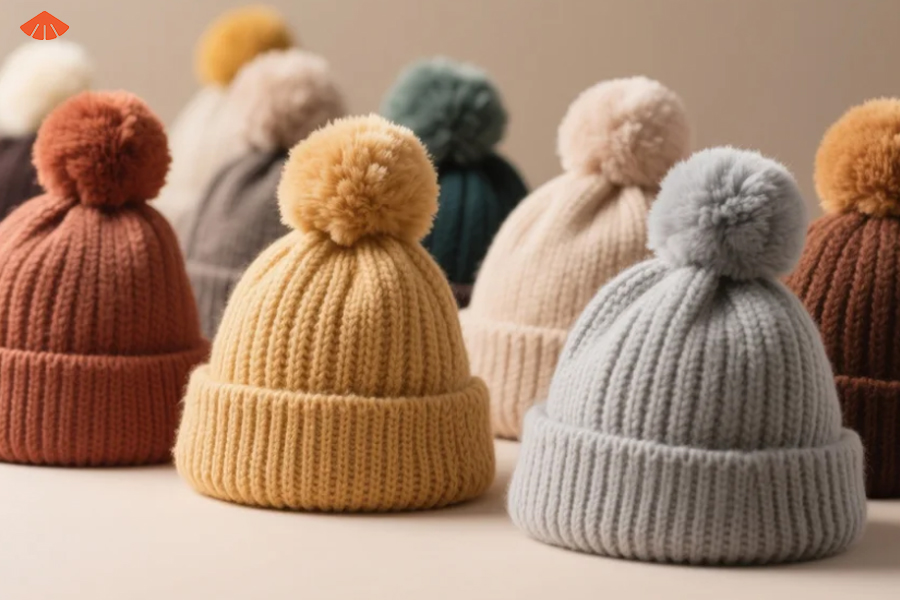
For acable knit pom hat, look for styles that combine decorative cable knit patterns on the main body with a 2x2 ribbed cuff and ribbed lining. This hybrid design delivers both visual appeal and practical shape retention. A fluffy cuffed beanie with a 2x2 ribbed inner lining will hold its shape far better than a style with only decorative stitching.
How to Test Rib Stitch Quality in Product Samples
If you’re working with a headwear wholesale supplier or evaluating product samples, there are three simple tests you can do in 30 seconds to assess rib stitch quality. These tests will help you avoid ordering inventory that will stretch out after just a few wears.
Quick rib stitch quality tests:
Stretch Test: Pull the cuff of the beanie to twice its original width and release. High-quality rib stitch will snap back to its original shape in less than 2 seconds with no visible wrinkling or distortion.
Recovery Test: Stretch the hat body gently and hold for 10 seconds, then release. Premium rib stitch will show no permanent stretching or misshapen areas.
Durability Test: Rub the ribbed area between your fingers 10 times. Well-constructed rib stitch will maintain its ridge structure without pilling or fraying.
When testing awomen cozy thick cable knit pom pom beanie, pay special attention to the area where the cable knit pattern meets the ribbed cuff. This transition zone is a common weak point—if the stitches are uneven or loose here, the hat will stretch out faster with regular wear.
Perfect Spandex Ratio for Long-Lasting Beanie Resilience
Rib stitch provides the structure, but spandex provides the stretch recovery power. Finding the right spandex ratio is critical to balancing comfort, warmth, and long-term shape retention.
The Ideal Spandex Blend Range for Winter Beanies
The optimal spandex content for a thick fuzzy winter hat depends on the hat’s intended use and target audience. Too little spandex, and the hat will stretch out quickly. Too much spandex, and the hat will feel tight, restrictive, and less warm.
Recommended spandex ratios by beanie type:
Everyday Fashion Beanies: 3-5% spandex. Balances comfort and shape retention for casual wear. Ideal for women's fashion boutique collections.
Performance Outdoor Beanies: 5-7% spandex. Provides superior stretch recovery for active use. Perfect for outdoor gear retail shop inventory.
Ultra-Warm Heavyweight Beanies: 2-4% spandex. Prioritizes warmth while maintaining basic shape retention. Best for extreme cold weather styles.
Kids’ Beanies: 4-6% spandex. Accommodates growing heads while retaining shape. Great for family-focused retail stores.
For a standardcozy thick cable knit cuffed faux fur pom pom beanie hat, a 4% spandex blend is the sweet spot. This ratio provides enough stretch to fit head sizes from54-58cmcomfortably while ensuring the hat returns to its original shape after each wear. Styles with custom logo&color options should use the same spandex ratio across all colorways to ensure consistent quality.
How to Verify Spandex Content and Quality
Many suppliers claim their beanies have a certain spandex content, but not all products live up to those claims. Verifying spandex quality and content is essential to avoid receiving subpar inventory that will lead to customer complaints.
Ways to verify spandex content before placing a bulk order:
Request a third-party fabric test report from the supplier
Check for consistent stretch across all areas of the hat
Wash a sample 5 times and re-test stretch recovery
Compare the weight of the sample to similar products with known spandex content
Low-quality spandex can break down after just a few washes, even if the initial content percentage is correct. Look for suppliers that use high-twist spandex yarns, which are more durable and resistant to wear and tear. Afaux fur knit hatwith premium spandex will maintain its shape and fit for 2-3 winter seasons, compared to 2-3 months for low-quality alternatives.
Sourcing High-Resilience Beanies for Your Business
Now that you understand the technical factors that make a beanie resilient, it’s time to apply that knowledge to your sourcing strategy. Whether you’re a startup founder building your first product line or a seasoned small business owner expanding your winter collection, these tips will help you find reliable suppliers and high-quality products.
Key Factors to Evaluate When Choosing a Supplier
Not all headwear wholesale suppliers are created equal. When sourcing faux fur pom beanie styles, it’s important to evaluate suppliers based on more than just price. Look for partners that can provide consistent quality, flexible customization options, and reliable lead times.
Critical supplier evaluation criteria:
Quality Control Processes: Do they conduct pre-shipment inspections for stitch quality and spandex content?
Customization Capabilities: Can they offer custom logo&color options without compromising resilience?
Minimum Order Quantities: Are MOQs low enough for small businesses, but scalable for larger orders?
Sample Policy: Do they provide affordable samples so you can test quality before ordering in bulk?
Sustainability Practices: Do they use eco-friendly yarns and ethical manufacturing processes?
For a women's fashion boutique, look for suppliers that offer small batch orders with unique color options and premium faux fur pom poms. For an outdoor gear retail shop, prioritize suppliers that specialize in performance fabrics and offer styles with enhanced water resistance and wind protection.
Building a Resilient Beanie Collection That Sells
Once you’ve found a reliable supplier, the next step is building a product collection that appeals to your target audience while maintaining consistent quality standards. A well-curated collection will help you maximize sales and reduce inventory waste.
Tips for building a high-performing beanie collection:
Include 3-5 core colors (black, gray, cream, navy, burgundy) that match a wide range of winter outfits
Add 2-3 seasonal trend colors each year to keep your collection fresh
Offer both classic cable knit styles and modern ribbed styles to cater to different tastes
Include size options or one-size-fits-most styles with
54-58cmstretch capacity
Add value with custom logo&color options for corporate clients or gift shoppers
Aim to include a mix of price points in your collection, from entry-level warm pom pom hat styles to premium fluffy cuffed beanie options. This will help you cater to different customer budgets while still maintaining your brand’s quality standards. Don’t forget to highlight the resilience features of your beanies in your product descriptions—this is a key selling point that many retailers overlook.
By focusing on rib stitch quality and spandex ratio when selecting yourcozy thick cable knit cuffed faux fur pom pom beanie hatinventory, you’ll be able to offer products that outperform competitors and build long-term customer loyalty. The upfront effort of testing samples and evaluating suppliers will pay off in reduced returns, positive reviews, and repeat business for years to come.
Interested in custom cap solutions? Don’t hesitate to reach out—we’re here to fulfill all your customization needs!
Follow & Message Us:
Facebook:https://www.facebook.com/fitwell.li
Instagram: www.instagram.com/fitwellcustomhats.dds/
LinkedIn:http://www.linkedin.com/in/fitwellcustom-hats-38a2b9b0/
Pinterest: http://www.pinterest.com/FitwellCustomHatsdds/
YouTube: http://www.youtube.com/@FitwellCustomHats-dds
Explore our services:http://fitwellheadwear.en.alibaba.com
WhatsApp us now: https://psce.pw/86jwa3