

Why SomeCozy Thick Cable Knit Cuffed Faux Fur Pom Pom Beanie HatFeels Lighter But Warmer: Gauge & Weight Secrets
If you’ve ever held two seemingly identicalcozy thick cable knit cuffed faux fur pom pom beanie hatstyles and noticed one feels far lighter yet traps heat better, you’re not imagining the difference. For B2B buyers, startup founders, and small business owners sourcing winter headwear, these subtle gaps in quality directly impact customer satisfaction and repeat sales.
The secret lies in two underdiscussed manufacturing details: knit gauge and fabric weight. Mastering these metrics helps you pick inventory that stands out in a crowded market, whether you run a headwear wholesale supplier, an outdoor gear retail shop, or a women's fashion boutique.
How Knit Gauge Shapes the Feel and Warmth of Your Beanie
Knit gauge, often shortened to “Gauge” or “GG,” refers to the number of stitches per inch in a knitted fabric. It’s the foundational factor that determines how dense, soft, or structured a beanie feels.
Gauge Basics: What Do the Numbers Mean for B2B Buyers?
Gauge is measured by counting stitches in a 1x1 inch swatch of fabric. A higher gauge number means more stitches per inch, while a lower number means fewer, larger stitches.
For winter beanies, common gauge ranges include:
3GG to 5GG: Chunky, loose knits with visible gaps between stitches
7GG to 9GG: Medium-density knits, the most common range for everyday winter hats
12GG to 14GG: Fine, tight knits with a smooth, almost woven appearance
Many buyers assume a chunkier look equals more warmth, but that’s not always true. A 9GG beanie with high-quality yarn can trap more heat than a 5GG style with cheap, thin fibers.
How Gauge Impacts Warmth, Weight, and Durability
Gauge affects three key performance metrics that matter most to your customers: warmth retention, overall weight, and long-term durability.
First, warmth depends on how much still air the knit structure can trap. Tighter gauges create tiny, stable air pockets that hold body heat effectively. Looser gauges have larger gaps that let cold air seep in, even if the yarn looks thick.
Second, weight varies with both gauge and yarn type. A high-gauge beanie with fine, high-loft yarn can feel lighter than a low-gauge style with bulky, low-quality fiber. That “light but warm” feel customers love comes from matching the right gauge to premium materials.
Third, durability improves with moderate to high gauges. Tighter stitches resist stretching, pilling, and shape loss after repeated wears and washes. Loose gauges are more prone to snags and deformation, which leads to higher return rates for your business.
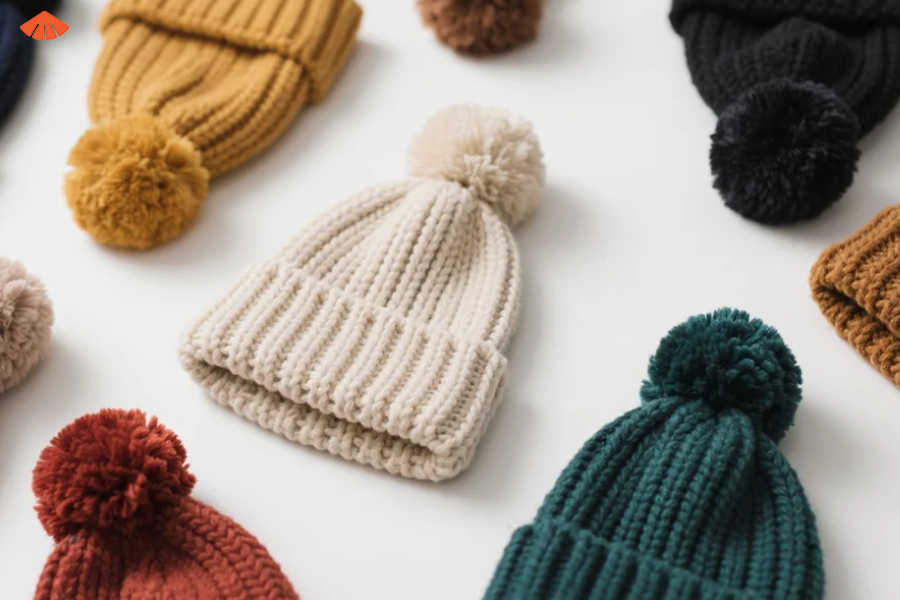
Awomen cozy thick cable knit pom pom beanie, for example, typically uses an 8GG to 10GG gauge to balance the classic cable texture with reliable warmth.
The Role of Fabric Weight in Creating a “Light But Warm” Beanie
Fabric weight, usually measured in grams per square meter (GSM) or total hat weight in grams, is the second piece of the quality puzzle. It’s closely tied to gauge but tells a different part of the performance story.
Common Weight Ranges for Winter Knit Hats
Winter beanies fall into three broad weight categories, each suited to different climates and use cases.
Lightweight options range from 80g to 120g per hat. These are ideal for mild winters, layering, or fashion-focused customers. A fluffy cuffed beanie in this weight range works well for everyday urban wear.
Midweight styles weigh 120g to 180g. This is the most versatile range, suitable for most cold-weather regions. Athick cuffed ribbed knit pom pom beaniein this weight balances warmth and portability.
Heavyweight beanies exceed 180g, sometimes reaching 250g or more. These are designed for extreme cold, outdoor work, or winter sports. A thick fuzzy winter hat in this category prioritizes maximum heat retention over lightness.
The “light but warm” sweet spot most customers seek sits in the 120g to 150g range, paired with a medium-to-high gauge and premium yarn.
Why Lower Weight Doesn’t Always Mean Less Warmth
The biggest misconception among new buyers is that heavier = warmer. In reality, yarn quality and knit structure matter far more than total weight.
High-loft yarns, such as premium acrylic blends or merino wool, create more air pockets per gram than cheap, dense fibers. That means a 130g beanie with high-loft yarn and a 9GG gauge can outperform a 200g beanie with low-grade fiber and a 5GG gauge.
For B2B buyers, this means you can offer customers a better user experience without increasing shipping costs or inventory weight. A warm pom pom hat that feels light and non-bulky is more likely to become a customer’s daily go-to.
How to Spot Quality Differences When Sourcing Beanies
With so many suppliers offering seemingly similar styles, it’s critical to know how to evaluate gauge and weight before placing a bulk order.
Key Questions to Ask Your Headwear Wholesale Supplier
Don’t rely on product photos alone—ask specific technical questions to assess a supplier’s quality standards.
Essential questions for any headwear wholesale supplier include:
What gauge is used for this beanie style?
What is the total weight per hat, and what is the yarn composition?
Can you provide a swatch or sample for physical evaluation?
Do you offer options for custom logo&color on this style?
What is the standard size range, and does it fit a
54-58cmhead circumference?
A reliable supplier will share these details openly and even provide test reports for warmth retention or colorfastness. Avoid suppliers who can’t answer basic gauge and weight questions—their products are likely inconsistent.
Simple At-Home Tests to Check Gauge and Weight Quality
If you have sample hats in hand, you can run quick tests to verify quality before committing to a large order.
First, do the “light test”: Hold the beanie up to a bright light source. If you see large, uniform gaps between stitches, the gauge is too low for reliable warmth. Fine, even gaps or minimal light penetration indicate a tighter, higher-quality gauge.
Second, do the “weight test”: Weigh the sample on a small kitchen scale and compare it to the supplier’s listed specs. A 10% to 15% variance is normal, but a 30%+ difference suggests poor quality control.
Third, do the “stretch test”: Pull the brim of the hat gently and release. A high-qualitycable knit pom hatwill snap back to its original shape quickly. A low-gauge, low-quality style will stay stretched out or develop permanent wrinkles.
These simple checks help you avoid costly inventory mistakes, whether you’re stocking an outdoor gear retail shop or a women's fashion boutique.
Matching Beanie Specs to Your Target Customer Base
Different customer segments have different priorities when it comes to winter hats. Aligning gauge, weight, and style with your audience’s needs is key to driving sales.
Best Beanie Styles for Different Retail and Business Models
Each type of business benefits from a tailored selection of beanie specs and styles.
For an outdoor gear retail shop, focus on mid-to-heavyweight styles with 9GG to 12GG gauges. Prioritize moisture-wicking yarns and durable construction. A thick fuzzy winter hat with a wind-resistant lining is a top seller for hikers and skiers.
For a women's fashion boutique, lean into medium-weight styles with 7GG to 9GG gauges and on-trend details. Awomen cozy thick cable knit pom pom beaniewith a soft faux fur pom fits perfectly into a curated winter accessory collection. Offer custom logo&color options for boutique branding.
For a headwear wholesale supplier serving diverse clients, maintain a range of gauges and weights. Stock everything from lightweightfaux fur knit hatstyles for fashion buyers to heavyweight options for workwear clients. Standard sizing of54-58cmworks for most adult customers.
Building a Profitable Beanie Inventory: Tips for Small Business Owners
For startup founders and small business owners, a curated inventory beats a massive selection every time. Focus on quality over quantity to build a loyal customer base.
Top tips for building a profitable beanie line:
Start with 3 to 5 core styles that cover different use cases (everyday, outdoor, fashion)
Prioritize “light but warm” specs that appeal to the broadest customer base
Add 1 to 2 premium styles with unique details, like a faux fur pom beanie with a handcrafted cable pattern
Test custom logo&color options for corporate or boutique clients
Collect customer feedback on fit and warmth to refine future orders
Athick cuffed ribbed knit pom pom beanieis a reliable core style that works for almost any audience. Pair it with a few trend-driven options to create a balanced, sellable collection.
By understanding the role of gauge and weight, you can source acozy thick cable knit cuffed faux fur pom pom beanie hatthat outperforms competitors’ bulkier, lower-quality options. Investing time in evaluating these technical details leads to higher customer satisfaction, fewer returns, and stronger long-term business growth.
Whether you’re a seasoned B2B buyer or a first-time startup founder, prioritizing quality metrics over low costs will help your winter headwear line stand out in a crowded market.
Interested in custom cap solutions? Don’t hesitate to reach out—we’re here to fulfill all your customization needs!
Follow & Message Us:
Facebook:https://www.facebook.com/fitwell.li
Instagram: www.instagram.com/fitwellcustomhats.dds/
LinkedIn:http://www.linkedin.com/in/fitwellcustom-hats-38a2b9b0/
Pinterest: http://www.pinterest.com/FitwellCustomHatsdds/
YouTube: http://www.youtube.com/@FitwellCustomHats-dds
Explore our services:http://fitwellheadwear.en.alibaba.com
WhatsApp us now: https://psce.pw/86jwa3