

Custom Beanie Sourcing 101: 5 Questions for OEM Factories AboutCozy Thick Cable Knit Cuffed Faux Fur Pom Pom Beanie Hat
For apparel brand owners, startup founders, and boutique online store owners, sourcing a high-quality cozy thick cable knit cuffed faux fur pom pom beanie hat can make or break your winter collection. A soft cozy winter beanie not only drives seasonal sales but also builds long-term brand loyalty when customers trust your product quality.
Many new brands fall into common traps: inconsistent stitching, cheap faux fur that sheds, or delivery delays that miss the holiday shopping window. This guide breaks down the 5 critical questions you must ask your OEM factory, plus actionable tips for verifying quality, customizing designs, and scaling your inventory.
Whether you’re a knitwear bulk supplier expanding your product line or a small boutique testing your first winter hat batch, these insights will help you avoid costly mistakes and build a reliable supply chain.
1. How Do You Ensure Quality Consistency for Bulk Custom Beanies?
Quality consistency is the #1 concern for B2B buyers ordering 500+ units ofheavy knit winter hats. A single defective batch can damage your brand reputation and lead to costly returns.
Material Sourcing and Testing Standards
The best OEM factories start quality control at the raw material stage, not just during final assembly. For a cozy thick cable knit cuffed faux fur pom pom beanie hat, material quality directly impacts warmth, durability, and customer satisfaction.
Look for factories that test:
Yarn thickness and tensile strength (to prevent pilling after 5+ washes)
Faux fur pom pom shedding resistance (minimum 1000 rub test pass rate)
Color fastness (no fading after 10+ cold water washes)
OEKO-TEX certification for skin-safe, non-toxic materials
For example, a premium factory will use 100% acrylic or acrylic-wool blend yarn with a 280-320 GSM weight for a thick knit skull cap. Cheaper alternatives use 200 GSM yarn that feels thin and loses shape after one season.
If you’re offering a hand knit cable hat style, ask about artisan training programs. Factories with dedicated hand-knitting teams have 30% fewer stitching errors than those relying solely on machine production.
Inline and Final Inspection Protocols
Top factories conduct 3 rounds of inspections, not just a single final check. This catches defects early and reduces waste during production.
Standard inspection checkpoints include:
Pre-production inspection: Verify yarn color, pom pom size, and cuff dimensions against your approved sample
Inline inspection (20% completion): Check cable knit pattern alignment, stitching tension, and
54-58cmsize accuracy
Final inspection (100% completion): Test pom pom attachment strength, cuff elasticity, and overall finish
For fashion accessory chain store owners ordering 5000+ units, ask for AQL 2.5 inspection standards. This means only 2.5% of units can have minor defects, and zero major defects are allowed.
If you’re orderingcustom beanies with 3d puff embroidery on cuff, pay extra attention to embroidery alignment. A misaligned logo by even 5mm looks unprofessional and hurts brand perception.
2. What Customization Options Do You Offer for Winter Beanies?
Customization is what turns a generic winter hat into a branded product that commands higher prices. The best OEM partners offer flexible custom logo&color options without forcing you to order unfeasibly large minimums.
Logo and Design Customization Capabilities
Beyond basic embroidery, modern factories offer multiple customization techniques to match your brand aesthetic. Each technique has different minimum order quantities (MOQs) and lead times.
Popular customization options for beanies:
3D puff embroidery: Creates a raised, textured logo perfect for bold brand marks (MOQ: 100 units per design)
Flat embroidery: Sleek, durable option for detailed logos (MOQ: 50 units per design)
Woven label: Sewn inside the cuff for a premium, high-end feel (MOQ: 200 units)
Hang tag: Custom branded tags for retail display (MOQ: 300 units)
For a cozy thick cable knit cuffed faux fur pom pom beanie hat, 3D puff embroidery on the cuff is a top choice. The thick cuff fabric provides a stable base, and the raised design stands out against the cable knit texture.
If you’re targeting younger audiences, consider acustom slouchy oversized knit beaniewith a large front logo. This style has grown 47% in popularity since 2022, according to retail trend data.
Size, Color, and Style Flexibility
One-size-fits-most beanies are standard, but top factories offer size customization for niche markets. The standard54-58cmsize fits 90% of adults, but you can also order smaller sizes for kids or larger sizes for plus-size markets.
Color options to ask about:
Solid colors: 20+ standard yarn colors available with no extra dye fee
Custom colors: Pantone matching available for orders over 300 units
Two-tone designs: Contrasting cuff and crown colors for a modern look
Gradient dye: Ombre effect for fashion-forward styles (MOQ: 500 units)
For boutique online store owners testing new styles, look for factories with low MOQ mixed-color options. This lets you order 50 units each of 5 colors for a total 250-unit order, reducing inventory risk.
If you’re expanding your product line, ask about complementary styles like cable knit ear warmer hats oroversized pom pom hats. Many factories offer discounted pricing when you order multiple styles in the same production run.
3. What Are Your MOQs, Pricing, and Lead Times?
Understanding pricing structure and lead times is critical for budgeting and inventory planning. Many new brands underestimate hidden costs or fail to account for production delays during peak season.
Transparent Pricing Breakdowns
A reputable OEM factory will provide a detailed pricing breakdown, not just a single per-unit cost. This helps you understand where your money is going and identify areas to save.
Typical cost components for custom beanies:
Base hat cost (yarn + knitting + assembly): $3.50-$6.00 per unit
Custom logo embroidery: $0.80-$1.50 per unit (depends on stitch count)
Faux fur pom pom upgrade: $1.00-$2.00 per unit
Custom packaging: $0.30-$0.80 per unit
Shipping: $0.50-$2.00 per unit (depends on destination)
For a standard cozy thick cable knit cuffed faux fur pom pom beanie hat with custom logo&color, expect to pay $5.80-$9.50 per unit for orders of 500+ units. Smaller orders (100-200 units) will cost 20-30% more per unit.
Knitwear bulk suppliers placing orders of 5000+ units can negotiate volume discounts of 15-25%. Always ask about tiered pricing to see if increasing your order by 100 units drops the per-unit cost enough to justify the extra inventory.
Beware of factories that quote prices 30% below average. These suppliers often cut corners on material quality, use cheap dye that fades, or skip inspection steps to save money.
Production and Shipping Lead Times
Lead times vary dramatically depending on order size, customization complexity, and time of year. Planning ahead can help you avoid rush fees and ensure your inventory arrives before peak selling season.
Standard lead time breakdown:
Sample production: 7-14 days
Bulk production: 20-35 days (for 500-2000 units)
Quality inspection: 2-3 days
Sea shipping: 25-35 days (US/EU destinations)
Air shipping: 5-7 days (more expensive, for rush orders)
For winter products, start sourcing 4-6 months before your target launch date. This gives you time for sample revisions, production, and shipping without rushing.
If you’re orderingcustom beanies with 3d puff embroidery on cuff, add 3-5 days to production time. Puff embroidery requires special foam and slower machine speeds to get the perfect raised effect.
For fashion accessory chain store owners with strict launch deadlines, ask about split shipping. This lets you air ship 20% of your order for a soft launch, while the rest arrives via sea freight to save cost.
4. How Do You Handle Sample Approval and Revision Processes?
Sample approval is your last chance to catch design flaws before mass production. A rigorous sample process reduces the risk of receiving thousands of units that don’t match your expectations.
Sample Types and Turnaround Times
Professional factories offer multiple sample stages to ensure alignment before starting full production. Skipping sample stages is one of the biggest mistakes new brands make.
Sample stages to expect:
Virtual sample: Digital mockup of your design (24-48 hour turnaround, often free)
Pre-production sample (PPS): Physical sample with exact materials and customization (7-14 days, $30-$100 fee, often refunded with bulk order)
Top of production sample (TOP): Sample pulled from the first 50 units of bulk production (3-5 days, included in order cost)
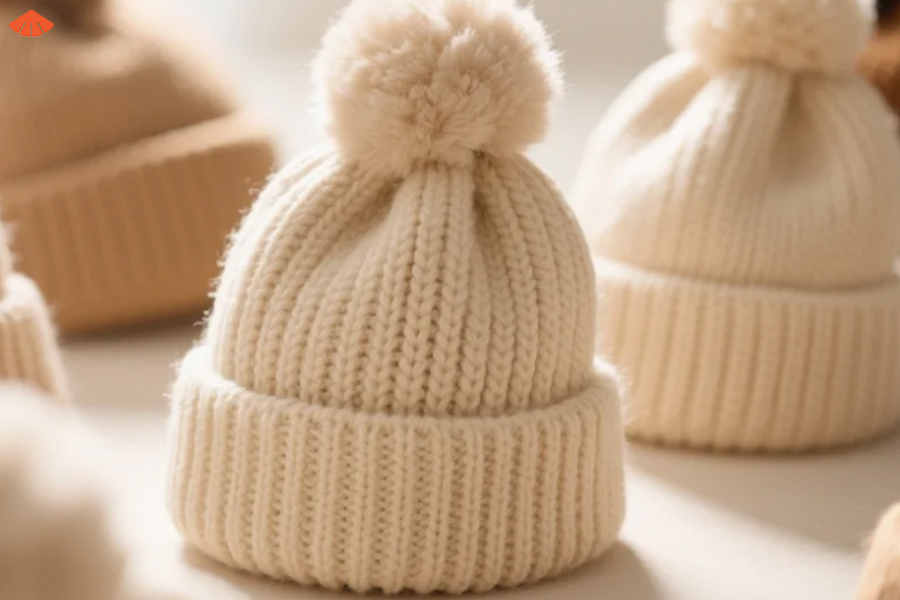
For a cozy thick cable knit cuffed faux fur pom pom beanie hat, pay close attention to the pre-production sample. Check the cable knit pattern depth, pom pom fluffiness, and cuff thickness against your requirements.
If you’re testing acustom slouchy oversized knit beaniestyle, wear the sample for a full day to test fit and comfort. A beanie that looks good on a mannequin might slip down or feel too tight after a few hours of wear.
Always order 2-3 samples in different sizes if you offer multiple size options. This lets you verify consistent quality across all size ranges.
Revision Policies and Change Fees
Even with detailed design specs, you’ll likely want to make small tweaks to your first sample. A good factory offers reasonable revision policies without charging exorbitant fees.
What to ask about revisions:
How many free revisions are included in the sample fee? (Standard: 1-2 rounds)
What is the cost for additional revisions? (Standard: $20-$50 per round)
How long do revisions take? (Standard: 5-7 days per round)
Can design changes be made after bulk production starts? (Usually only possible in the first 3 days)
For boutique online store owners working with tight budgets, clarify revision costs upfront. Unexpected revision fees can quickly eat into your profit margin.
If you’re making major changes (like switching from a hand knit cable hat to a machine-knit style), expect to pay a new sample fee and wait for a full new sample cycle.
5. What Post-Production Support and Warranty Do You Offer?
Your relationship with your OEM factory doesn’t end when your order ships. Reliable partners stand behind their products and offer support if issues arise after delivery.
Defect Resolution and Replacement Policies
Even with strict quality control, a small percentage of defective units is normal. The difference between a good and bad factory is how they handle these defects.
What to look for in a defect policy:
Defect rate guarantee: Less than 2% defect rate for standard orders
Replacement process: Defective units replaced for free or credited to your next order
Response time: 24-48 hour response to defect claims
Proof requirements: Clear photos or video of defects (no need to return all defective units)
For aheavy knit winter hat, common defects include loose stitching, pom pom detachment, and size inconsistencies. A reputable factory will have a clear process for reporting and resolving these issues.
For knitwear bulk suppliers placing large orders, negotiate a defect reserve. This means 5-10% of the payment is held for 30 days after delivery to cover any defect costs.
If you’re selling a soft cozy winter beanie as a premium product, your defect tolerance should be even lower. Premium customers expect perfect quality, and even a small defect can lead to a negative review.
Reorder and Scaling Support
As your brand grows, you’ll need a factory that can scale with you. The best partners offer reorder discounts and flexible production capacity for peak seasons.
Scaling support to look for:
Reorder discount: 5-10% off for repeat orders of the same design
Fast reorder turnaround: 10-15 days for reorders (if materials are in stock)
Peak season capacity: Ability to handle 2-3x normal order volume during Q4
New product development: Support for expanding into related styles like cable knit ear warmer hats
For fashion accessory chain store owners planning seasonal collections, ask about forecast planning. Many factories will reserve production capacity if you provide a 3-month sales forecast.
If you’re testing a newoversized pom pom hatstyle, start with a small MOQ order (100-200 units). Once you validate sales, you can reorder larger quantities with confidence.
Final Thoughts
Sourcing a high-quality cozy thick cable knit cuffed faux fur pom pom beanie hat doesn’t have to be stressful. By asking these 5 critical questions, you can vet OEM factories thoroughly and build a reliable supply chain that supports your brand’s growth.
Remember: the cheapest factory is rarely the best choice. Prioritize quality consistency, transparent communication, and long-term partnership over the lowest per-unit price.
Whether you’re a boutique online store owner launching your first winter collection or a knitwear bulk supplier expanding your product catalog, taking the time to find the right OEM partner will pay off in higher customer satisfaction, fewer returns, and stronger brand loyalty.
Interested in custom cap solutions? Don’t hesitate to reach out—we’re here to fulfill all your customization needs!
Follow & Message Us:
Facebook:https://www.facebook.com/fitwell.li
Instagram: www.instagram.com/fitwellcustomhats.dds/
LinkedIn:http://www.linkedin.com/in/fitwellcustom-hats-38a2b9b0/
Pinterest: http://www.pinterest.com/FitwellCustomHatsdds/
YouTube: http://www.youtube.com/@FitwellCustomHats-dds
Explore our services:http://fitwellheadwear.en.alibaba.com
WhatsApp us now: https://psce.pw/86jwa3