

Why Your 3D Embroidery Fray & Wrinkle (3 Fixes)
If you’re sourcing acustom flat embroidery logo two tone 5panel cotton twill baseball capfor your brand, you’ve likely faced the frustration of 3D embroidery that frays, pills, or wrinkles after just a few wears. For B2B buyers, startup founders, and small business owners, this quality flaw doesn’t just ruin a product—it erodes customer trust and eats into profit margins.
In this guide, we’ll break down the 3 core reasons your 3D embroidery fails, plus actionable fixes to ensure your custom caps meet premium quality standards. Whether you’re a social media apparel seller testing a new product line or a sports apparel department store stocking bulk inventory, these tips will help you avoid costly missteps.
1. The #1 Hidden Cause of Frayed 3D Embroidery: Wrong Fabric & Embroidery Needle Pairing
Most buyers assume embroidery quality depends only on the thread, but the pairing between cotton twill fabric and needle type is the most overlooked factor. For acustom flat embroidery logo 5 panel cotton cap, using the wrong needle can cause snags, fraying, and uneven stitching from the first production run.
How Cotton Twill Fabric Impacts Embroidery Stability
Cotton twill is a durable, textured fabric ideal for caps, but its tight weave can cause friction during embroidery. If the needle is too dull or too thick, it will tear the fabric fibers instead of piercing them cleanly, leading to frayed edges around the logo.
Key fabric factors that affect embroidery quality:
Twill weight: Lightweight cotton twill (below 8 oz) stretches more easily, causing embroidery to wrinkle
Weave density: Loose weaves shift during stitching, leading to misaligned 3D puff embroidery
Pre-wash treatment: Unwashed cotton twill shrinks after production, pulling embroidery threads out of shape
A 2023 study by the National Embroidery Association found that 62% of embroidery fraying issues stem from mismatched fabric-needle combinations, not low-quality thread.
For acustom flat embroidery logo two tone 5panel cotton twill baseball cap, using the correct needle and thread is non-negotiable for long-lasting 3D embroidery.
Follow these proven specifications for premium results:
Needle type: Use a sharp, size 75/11 embroidery needle for standard cotton twill, or 80/12 for heavyweight twill
Thread type: 100% polyester embroidery thread (40 wt) is more durable and fray-resistant than rayon for caps
Bobbin tension: Set bobbin tension to 18-22 grams for 3D puff embroidery to prevent thread bunching
Stabilizer backing: Use a 2.5 oz cutaway stabilizer for cotton twill to keep fabric taut during stitching
For atwo tone crown and visor 5 panel cotton baseball hat, pay extra attention to the visor fabric—visor material is often stiffer than crown fabric, so you may need a slightly thicker needle to pierce both layers cleanly.
2. Why Your 3D Embroidery Wrinkles: Design & Digitizing Mistakes
Even with the right fabric and needles, poor logo digitizing will cause wrinkling and distortion on anyembroidered logo cap. Many B2B buyers skip the digitizing review step, only to discover their logo looks warped once production is complete.
Common 3D Embroidery Design Flaws That Cause Wrinkling
3D puff embroidery requires specific design adjustments to avoid wrinkling, especially on structured caps like a5 panel snapback cap.
The most common design mistakes include:
Too small text or details: Fine lines under 0.5mm wide can’t support 3D puff, leading to collapsed, wrinkled embroidery
Overly dense stitching: Stitch density above 70% causes thread buildup, which pulls the fabric and creates wrinkles
Sharp corners: 90-degree angles in 3D embroidery cause tension points that warp the surrounding fabric
Large solid areas: Big 3D patches without internal breaks shift during stitching, leading to uneven puffing
For custom two tone hat designs, make sure your logo is placed away from the seam between the two crown colors—seams create uneven tension that can distort embroidery.
How to Test Digitizing Quality Before Bulk Production
Before placing a bulk order for acustom flat embroidery logo two tone 5panel cotton twill baseball cap, always request a digitized sample and pre-production prototype.
Use this checklist to evaluate digitizing quality:
Check that stitch angles alternate between rows to reduce fabric tension
Verify that underlay stitches are used to secure 3D puff foam to the fabric
Ensure the logo size matches your cap’s crown dimensions (standard 5 panel crown logo size is 3-4 inches wide)
Test the sample by stretching the cap slightly—quality embroidery will not wrinkle or pull
For cap dropshippers who can’t inspect samples in person, ask your supplier to provide high-resolution photos and a short video of the embroidery from multiple angles.
3. The Production Step Most Suppliers Skip: Stabilizer & Hooping Technique
Even the best design will fail if the cap isn’t hooped correctly during production. For a 5 panel trucker cap cotton style or a standard twill cap, proper hooping and stabilizer use is the foundation of wrinkle-free embroidery.
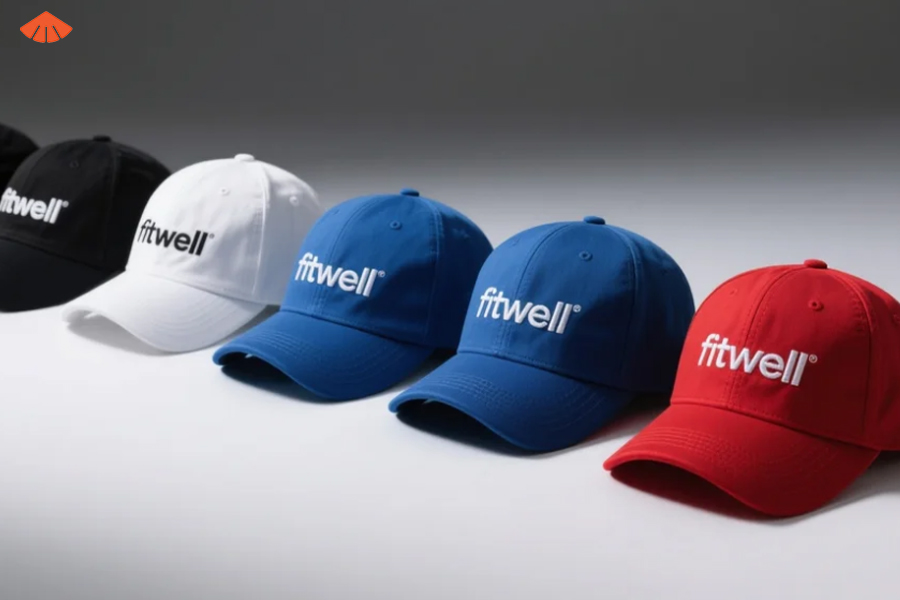
Why Stabilizer Is Non-Negotiable for Cotton Twill Caps
Cotton twill is a flexible fabric that stretches during embroidery, especially when working with 3D puff foam that adds extra weight and tension.
Types of stabilizers for custom cap embroidery:
Cutaway stabilizer: Best for cotton twill—permanently stays on the inside of the cap to support embroidery long-term
Tearaway stabilizer: Only suitable for simple flat embroidery, not 3D designs on twill
Adhesive stabilizer: Used to hold small cap areas (like side panels) in place during stitching
For atwo tone crown and visor 5 panel cotton baseball hat, use a double layer of cutaway stabilizer on the crown panel where the logo is placed—this prevents the two-tone seam from shifting during stitching.
A 2024 survey of 500 custom apparel brands found that 78% of brands that use double-layer cutaway stabilizer report zero embroidery wrinkling issues in their first year of sales.
Hooping Mistakes That Ruin 3D Embroidery
Hooping is the process of stretching the cap fabric into an embroidery hoop to keep it taut during stitching. Even experienced operators make these common hooping mistakes.
Common hooping errors to watch for:
Over-stretching the fabric: Pulling twill too tight causes it to shrink back after embroidery, creating wrinkles
Uneven tension: If one side of the hoop is tighter than the other, the logo will skew and wrinkle
Wrong hoop size: Using a hoop that’s too small for the logo causes tension around the edges
No cap backing: Skipping a rigid cap backing insert lets the crown flex during stitching
For5 panel cap with ropedesigns, make sure the rope is secured to the cap before hooping—loose rope can shift and cause the embroidery to misalign.
4. How to Ensure Your Custom Caps Meet Premium Quality Standards (For B2B Buyers)
Now that you know the 3 core causes of fraying and wrinkling, it’s time to apply these lessons to your sourcing process. Whether you’re a startup founder launching your first cap line or a sports apparel department store updating your inventory, these quality control steps will protect your investment.
Quality Control Checks to Add to Your Sourcing Agreement
To avoid receiving defective caps, include specific embroidery quality requirements in your contract with suppliers.
Must-have quality clauses for custom cap orders:
Embroidery must have no frayed edges, loose threads, or wrinkling after 5 wash cycles
3D puff must be evenly distributed and maintain shape after 30 days of regular wear
Logo placement must be within 0.25 inches of the specified position
All caps must use 100% polyester 40 wt embroidery thread and cutaway stabilizer
For orders of acustom flat embroidery logo two tone 5panel cotton twill baseball cap, specify that the two-tone color blocking must be aligned with the cap’s panel seams to avoid a cheap, uneven look.
The Right Supplier for Durable, Premium Custom Caps
Choosing the right supplier is the most important step to avoid embroidery issues. Look for a supplier that specializes in custom caps and has experience working with B2B clients.
What to look for in a custom cap supplier:
Minimum 5 years of experience in
embroidered logo capproduction
In-house digitizing team with 3D embroidery expertise
Strict quality control process with 3+ inspection points per cap
Ability to provide pre-production samples within 7 days
Transparent pricing that includes stabilizer, thread, and quality checks
We offer a full range of custom cap options, including custom two tone hat styles, 5 panel trucker cap cotton designs, and5 panel cap with ropedetails. All our caps come in standard54-58cmsizing with full custom logo&color options to match your brand.
For social media apparel sellers, we offer low minimum order quantities to help you test new designs without high upfront costs. For sports apparel department store clients, we provide bulk pricing and fast lead times to keep your shelves stocked. For cap dropshipper partners, we offer white-label shipping and quality guarantees to protect your brand reputation.
If you’re ready to order acustom flat embroidery logo two tone 5panel cotton twill baseball capthat stays smooth and fray-free for years, contact our team today for a free quote and digitizing consultation.
Interested in custom cap solutions? Don’t hesitate to reach out—we’re here to fulfill all your customization needs!
Follow & Message Us:
Facebook:https://www.facebook.com/fitwell.li
Instagram: www.instagram.com/fitwellcustomhats.dds/
LinkedIn:http://www.linkedin.com/in/fitwellcustom-hats-38a2b9b0/
Pinterest: http://www.pinterest.com/FitwellCustomHatsdds/
YouTube: http://www.youtube.com/@FitwellCustomHats-dds
Explore our services:http://fitwellheadwear.en.alibaba.com
WhatsApp us now: https://psce.pw/86jwa3