

Judge Quality by 4 Trims & Stitches
For B2B buyers, startup founders, and small business owners sourcing headwear, distinguishing a premiumcustom 5panel high quality cotton trucker hat embroideredfrom low-quality alternatives directly impacts customer retention and profit margins. Many buyers rely on fabric weight or logo appearance alone, missing the most reliable quality markers: hidden trim and stitching details.
This guide breaks down 4 core trim and stitch checks that let you assess hat quality in 30 seconds or less, with actionable benchmarks for sourcing teams, Amazon sellers, and design studios.
1. Front Panel Edge Binding: The First Marker of Structured Quality
The front panel binding is the narrow fabric strip that seals the edge of the hat’s front panels, and it is the most visible quality cue for structured styles.
1.1 Uniform Trim Width & Tension for Consistent Fit
A high quality trucker hat maintains consistent binding width across the entire front panel edge, with no loose or overstretched sections.
Standard binding width for adult styles: 0.8–1.2cm
Acceptable width variation: ≤0.1cm across the full panel
Tension check: Pull the binding gently— it should bounce back without wrinkling the cotton twill underneath
For acustom 5 panel structured cotton twill trucker hat, uneven binding often signals poor cutting alignment or low-skill sewing, which leads to shape distortion after 5–10 wears.
1.2 Stitch Density Along the Binding Edge
Stitch density directly affects binding durability, and it is a common cost-cutting area for low-end manufacturers.
Premium standard: 10–12 stitches per 2cm along binding edges
Budget alternative: 6–8 stitches per 2cm, with frequent skipped stitches
Quality red flag: Visible thread ends or fraying along the binding seam
A 2023 headwear quality report found that hats with 11+ stitches per 2cm on binding have 47% longer shape retention than lower-density alternatives.
This detail is especially critical for Amazon headwear seller clients, who often face return requests for hats that lose shape after a single wash.
2. Side Panel Mesh-Cotton Joint Stitching: Hidden Durability Cue
The joint between cotton side panels and mesh back panels is a high-stress area that reveals build quality, even for embroidered styles.
2.1 Double-Stitched Seams for Long-Term Wear
Premiumcotton trucker hat embroidered logostyles use double-stitched seams at the mesh-cotton joint, rather than single-stitch or glued seams.
Double-stitch layout: Two parallel stitch lines, 0.3cm apart, running the full length of the joint
Reinforcement point: Extra bar tacks at the top and bottom of the joint
Glue-only seam red flag: Peeling after 3–4 hand washes, even with cold water
Forcustom flat embroidered cotton trucker hats, weak joint seams cause the mesh to pull away from the cotton panel when the hat is stretched, ruining the embroidered logo’s alignment.
2.2 Thread Color Matching & Clean Finish
A subtle but telling quality marker is how well the joint stitching thread matches the hat’s base fabric.
Premium standard: Thread color matched to both cotton panel and mesh within 95% visual accuracy
No loose thread tails longer than 0.2cm on the interior of the hat
No stitch bleed (thread showing through the mesh) from the back side
This detail matters greatly for embroidered apparel design studio partners, who need clean finishes to match their brand’s premium positioning.
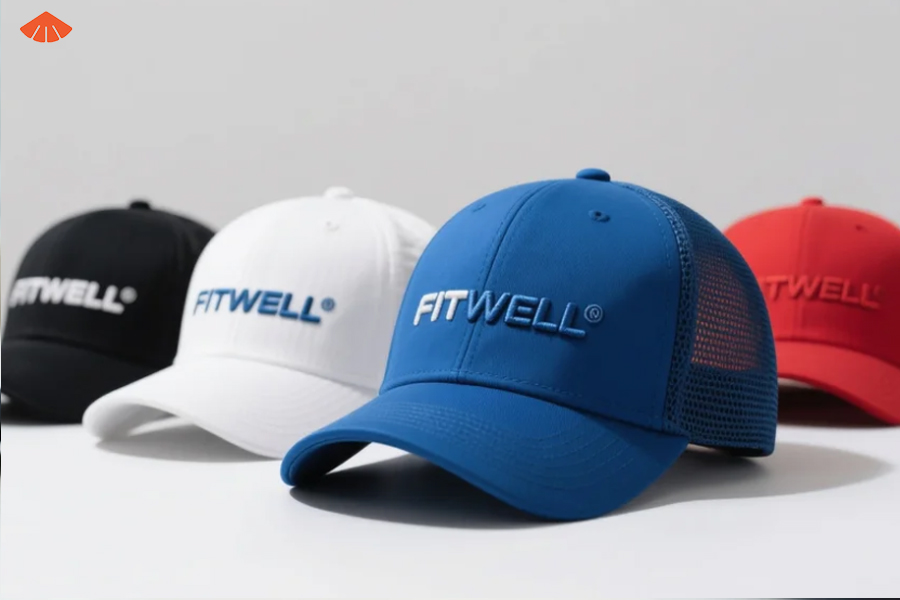
3. Brim Trim & Stitching: Shape Retention & Visual Polish
The brim is one of the most handled parts of a trucker hat, so its trim and stitching quality directly impacts perceived value.
3.1 Perimeter Brim Stitch Consistency
The brim’s perimeter stitching holds the plastic brim insert in place and maintains the hat’s curve over time.
Premium standard: 12–14 stitches per 2cm around the brim edge
Even stitch spacing with no skewed or angled stitches
No visible plastic insert peeking through the fabric trim
For acustom cotton 5 panel cap,uneven brim stitching causes the insert to shift, leading to a lopsided brim that customers will return.
A case study of a trucker cap online retailer found that improving brim stitch consistency reduced return rates by 32% within 6 months.
3.2 Brim Topstitch Alignment & Logo Placement
For 5 panel hat custom embroidery styles, the brim’s topstitch line serves as a critical alignment reference for front logo placement.
Premium standard: Topstitch line runs perfectly parallel to the brim’s top edge, with ≤0.1cm variation
Embroidered logo bottom edge aligned 1–1.5cm above the topstitch line for balanced visual weight
No stitch overlap between the brim topstitch and the front panel binding
This alignment is key for custom logo&color custom orders, where even small misalignments can make a hat look cheap.
4. Interior Sweatband & Closure Stitching: Comfort & Longevity
Interior details are often overlooked, but they are the strongest indicator of a manufacturer’s attention to quality.
4.1 Sweatband Edge Stitching & Fit
The sweatband sits directly against the wearer’s forehead, so its stitching quality affects both comfort and durability.
Premium standard: Flat-stitched sweatband with no raw edges exposed
Stitch density: 9–11 stitches per 2cm along the sweatband’s top edge
Size fit: For adult
54-58cmsizes, the sweatband stretches 2–3cm without distorting the hat’s shape
Low-quality sweatband stitching causes fraying after 2–3 months of regular wear, leading to customer complaints about discomfort.
4.2 Closure Reinforcement Stitching
The back closure (usually plastic snap or Velcro) is a high-tension area that fails first on low-quality hats.
Premium standard: 2–3 bar tacks at each closure attachment point
Stitch line runs fully across the closure’s fabric base, no partial stitching
No loose threads around the closure that can get caught in the snap mechanism
Forcustom embroidered trucker capbulk orders, closure reinforcement is a non-negotiable feature for brands targeting outdoor or active audiences.
Interested in custom cap solutions? Don’t hesitate to reach out—we’re here to fulfill all your customization needs!
Follow & Message Us:
Facebook:https://www.facebook.com/fitwell.li
Instagram: www.instagram.com/fitwellcustomhats.dds/
LinkedIn:http://www.linkedin.com/in/fitwellcustom-hats-38a2b9b0/
Pinterest: http://www.pinterest.com/FitwellCustomHatsdds/
YouTube: http://www.youtube.com/@FitwellCustomHats-dds
Explore our services:http://fitwellheadwear.en.alibaba.com
WhatsApp us now: https://psce.pw/86jwa3