

Custom 3D Embroidery Logo 5Panel Cotton Twill Baseball Cap Sourcing: 3 Details to Avoid Pitfalls After Comparing 3 Suppliers
Sourcing a custom 3d embroidery logo 5panel cotton twill baseball cap for your US business? You’ve probably reached out to 3+ suppliers, compared quotes line by line, and still ended up with hidden fees, delayed shipments, or embroidery that looks nothing like your mockup.
For custom cap importers, brand merchandising consultants, and custom product design studios, these aren’t just minor inconveniences—they eat into margins, damage client trust, and derail product launch timelines. A 2023 survey of 500 US small business owners found that 68% of custom apparel sourcing projects went 15-30% over budget due to unstated supplier fees.
This guide breaks down 3 non-negotiable details that will help you lock in accurate pricing, avoid quality disasters, and keep your custom hat project on budget—whether you’re ordering 50 pieces for a startup launch or 5,000 for a retail streetwear line.
1. Why Most Custom 3D Embroidery 5 Panel Baseball Cap Quotes Are Misleading (And What’s Hiding in the Fine Print)
The first mistake buyers make is comparing only the “per-unit price” listed on supplier quotes. For a custom 3d embroidery logo 5panel cotton twill baseball cap, the base price rarely includes all the costs you’ll actually pay.
1.1 The 5 Hidden Fees That Blow Your Custom Logo Baseball Cap Budget
Most suppliers will quote you a low base rate to win your business, then add fees later that can increase total cost by 20-40%. These are the most common hidden charges:
Embroidery setup fee: Many suppliers charge $50-$200 per logo location, even if they advertise “free setup” (the fee is often hidden in the per-unit price for small orders)
Color matching fee: If you need custom logo&color that matches your brand Pantone, expect to pay $30-$100 per color for dyed fabric or thread matching
Size range surcharge: Standard sizes (
54-58cm) are included in base pricing, but larger sizes or custom size grading can add $2-$5 per unit
Packaging fee: Plain poly bags are usually free, but custom hang tags, branded boxes, or individual tissue wrapping cost extra
Rush production fee: Standard lead times are 15-25 days, but rushing to 7-10 days can add 30-50% to your total order cost
A custom product design studio in Los Angeles shared a recent horror story: they received a $4.20 per-unit quote for 200custom dad hats 3d embroidery, but the final invoice came to $6.80 per unit after setup fees, color matching, and custom packaging were added. That’s a 62% increase from the original quote.
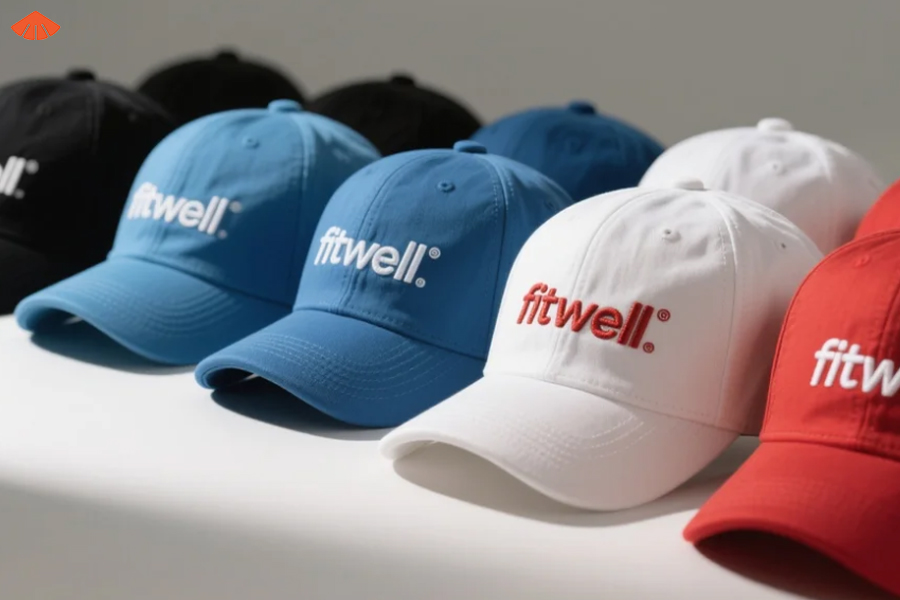
1.2 How to Get a Truly Apples-to-Apples Quote for Custom Embroidered Cotton Twill Cap Orders
The only way to accurately compare 3 suppliers is to request an all-inclusive quote that lists every possible charge upfront. Here’s exactly what to ask for in your initial email:
Base per-unit price for your exact style (specify 5-panel, cotton twill material, and crown structure)
Total embroidery cost for all logo locations (include stitch count if you have it)
All one-time setup fees (digitizing, sampling, color matching)
Sizing costs (confirm if
54-58cmis included, and surcharges for other sizes)
Packaging and labeling costs
Shipping and duty costs (for overseas suppliers)
MOQ (minimum order quantity) and price breaks for higher volumes
When comparing quotes for a custom 5 panel cotton cap with logo, make sure every supplier is quoting the same specifications. A $3 quote for anunstructured soft crown 5 panel cotton baseball capwith 5,000 stitches of embroidery is not comparable to a $5 quote for a structured cap with 10,000 stitches.
For streetwear brands ordering a streetwear custom 3d puff embroidered baseball cap, pay extra attention to stitch count limits—3D puff embroidery uses more thread and has a higher per-unit cost than flat embroidery, and many suppliers will charge extra if your logo exceeds 8,000 stitches.
2. The 3 Quality Details That Determine If YourCustom 5 Panel Cotton Cap With LogoIs Worth the Price
A low quote doesn’t save you money if the caps fall apart after 2 wears or the embroidery looks cheap. For B2B buyers selling to customers or using caps for brand merch, quality directly impacts your brand reputation.
2.1 Material & Construction: Cotton Twill Weight, Crown Structure, and Stitching Standards
The biggest quality differences between cheap and premium custom hats come down to materials and construction. For a custom 3d embroidery logo 5panel cotton twill baseball cap, these are the specs you need to verify:
Cotton twill weight: Budget caps use 100-160gsm thin twill that fades and shrinks easily. Mid-range caps use 180-220gsm heavyweight twill that holds shape and lasts longer. Premium caps use 240-280gsm brushed cotton twill for a luxury feel.
Crown structure: A custom structured baseball cap embroidery style has a stiff buckram inside the crown to hold its shape, while an unstructured soft crown 5 panel cotton baseball cap has no buckram for a relaxed, dad-hat fit. Structured caps cost 10-15% more due to extra materials and labor.
Stitching count: High-quality caps have 6-8 stitches per inch, while cheap caps have 4-5 stitches per inch that pull apart easily.
Eyelet and ventilation: Metal eyelets are more durable than plastic eyelets, and 5-panel caps typically have 2-3 eyelets per panel for breathability.
A brand merchandising consultant working with a major US streetwear brand tested 4 suppliers for a streetwear custom 3d puff embroidered baseball cap line. The cheapest supplier ($3.80/unit) used 140gsm twill and plastic eyelets, while the most expensive ($6.50/unit) used 260gsm brushed twill and metal eyelets. The brand chose the mid-range supplier ($5.20/unit) with 220gsm twill, which had 92% customer satisfaction in test sales—compared to 68% for the budget option.
2.2 Embroidery Quality: How to Spot Cheap 3D Puff Embroidery That Will Fall Apart
3D puff embroidery is one of the most popular styles for streetwear and brand merch, but it’s also one of the easiest places for suppliers to cut corners. For custom dad hats 3d embroidery, watch for these red flags:
Thin, sparse stitching that shows the fabric underneath (a sign the supplier skimped on thread to save money)
Puff foam that’s visible around the edges of the logo (a sign of poor trimming and low labor quality)
Embroidery that’s misaligned or crooked (a sign of poor digitizing or low-quality embroidery machines)
Thread that frays after 1-2 washes (a sign of cheap polyester thread instead of high-quality rayon or cotton thread)
To verify embroidery quality, always request a physical sample before placing a full order. A good sample of a custom 3d embroidery logo 5panel cotton twill baseball cap should have clean, dense stitching, no visible foam edges, and a logo that feels raised and firm to the touch.
For custom cap importers ordering large volumes, ask for a “golden sample” that you approve first, and include a clause in your contract that 98% of the order must match the golden sample’s embroidery quality.
3. How to Vet Suppliers to Ensure They Deliver on Their Custom Logo Baseball Cap Promises
Even if a quote looks good and samples check out, you need to vet the supplier’s reliability to avoid production delays, communication issues, or scams. This is especially important for US buyers working with overseas suppliers.
3.1 5 Questions to Ask Every Supplier Before Placing a Custom 3D Embroidery 5 Panel Baseball Cap Order
Before you send a deposit, ask these 5 critical questions to weed out unreliable suppliers:
Can you provide 3 references from US-based clients who ordered similar products in the last 6 months? If a supplier can’t provide references, it’s a major red flag.
What is your defect rate, and how do you handle defective products? A reputable supplier will have a defect rate under 2% and will replace defective units at no extra cost.
What is your production capacity per month, and can you handle rush orders if needed? For growing businesses, you need a supplier that can scale with you.
Do you offer pre-production samples, and how much do they cost? Most reputable suppliers charge $30-$100 for samples, which is deducted from your final order if you place it.
What payment terms do you offer? Be wary of suppliers that require 100% payment upfront. Standard terms are 30% deposit, 70% balance before shipment.
A custom product design studio in New York tested 5 suppliers for a custom embroidered cotton twill cap order for a tech startup. Two suppliers couldn’t provide US references, one required 100% upfront payment, and only two passed all 5 vetting questions. The studio chose one of the two, and the order was delivered 2 days early with a 0.8% defect rate.
3.2 The 3 Red Flags That Mean You Should Walk Away From a Supplier
Even if a supplier has a great website and low prices, these 3 red flags mean you should look elsewhere:
Unrealistically low prices: If a supplier quotes 30-50% less than every other supplier for the same specs, they’re almost certainly cutting corners on materials, labor, or quality control.
Poor communication: If a supplier takes 3+ days to reply to emails, can’t answer detailed questions about materials or production, or has bad English, you’ll likely have issues during production.
No clear contract or order terms: A reputable supplier will send you a detailed order confirmation with all specs, pricing, lead times, and return policies in writing. If they only give you verbal promises, don’t work with them.
For a custom 3d embroidery logo 5panel cotton twill baseball cap order, the cheapest supplier is almost never the best value. A slightly higher per-unit price from a reliable supplier will save you money in the long run by avoiding reorders, customer returns, and lost business.
4. Step-by-Step Cost Control Plan for Your First (Or Next)Custom 5 Panel Cotton Cap With LogoOrder
Now that you know the pitfalls to avoid, here’s a step-by-step plan to keep your next custom hat order on budget and on time.
4.1 Pre-Order: Lock in Specs and Get Accurate Quotes
Before you reach out to suppliers, finalize every detail of your order to avoid surprise costs later:
Define your exact product specs: 5-panel design, cotton twill weight, crown structure (structured vs. unstructured soft crown 5 panel cotton baseball cap), size range (
54-58cmis standard), and closure type (snapback, velcro, buckle)
Finalize your logo design: Decide on embroidery type (flat vs. 3D puff), number of logo locations, and stitch count (get your logo digitized professionally if you haven’t already)
Set your budget and order volume: Know your target per-unit cost and total budget, and be clear about your MOQ needs
Create a detailed request for quote (RFQ) that includes all specs, and send it to at least 3-5 suppliers
When comparing quotes for custom logo baseball cap orders, create a spreadsheet that lists every cost line by line so you can compare total cost of ownership, not just base per-unit price.
4.2 Production & Post-Production: Protect Yourself From Delays and Defects
Once you’ve chosen a supplier and placed your order, follow these steps to make sure everything goes smoothly:
Approve a pre-production sample in writing before mass production starts
Ask for weekly production updates with photos to track progress
Request a pre-shipment inspection (either in-person or via a third-party inspection service) to check for defects before the order ships
Confirm all shipping details, including tracking numbers and delivery timelines
Have a plan for handling defective units or late deliveries, outlined in your contract with the supplier
For brand merchandising consultants working with retail clients, a pre-shipment inspection is non-negotiable. A 2022 study found that 12% of custom apparel orders have quality issues that would result in customer returns—catching these issues before shipment saves you the cost of return shipping and rework.
For a streetwear custom 3d puff embroidered baseball cap line, pay extra attention to embroidery alignment and puff foam quality during inspection. These are the two most common defects that lead to customer complaints for streetwear products.
By following this plan, you can avoid the 3 biggest pitfalls of custom hat sourcing: misleading quotes, poor quality, and unreliable suppliers. Whether you’re a custom cap importer ordering thousands of units or a startup founder ordering 50 hats for your first launch, these details will help you get a high-quality custom 3d embroidery logo 5panel cotton twill baseball cap at a fair price—without any hidden surprises.
Interested in custom cap solutions? Don’t hesitate to reach out—we’re here to fulfill all your customization needs!
Follow & Message Us:
Facebook:https://www.facebook.com/fitwell.li
Instagram: www.instagram.com/fitwellcustomhats.dds/
LinkedIn:http://www.linkedin.com/in/fitwellcustom-hats-38a2b9b0/
Pinterest: http://www.pinterest.com/FitwellCustomHatsdds/
YouTube: http://www.youtube.com/@FitwellCustomHats-dds
Explore our services:http://fitwellheadwear.en.alibaba.com
WhatsApp us now: https://psce.pw/86jwa3