

How Much Does an Aussie Hat Owner Lose With 1000 UnsoldStreet Wear Black 5Panel Custom 3D Embroidered Snapback Hats?
For small business owners and B2B buyers in Australia’s streetwear scene, seasonal inventory bets can make or break a quarter.Street wear black 5panel custom 3d embroidered snapback hatsare a staple for urban fashion brands, but overstocking during peak season can lead to months of stagnant stock and hidden losses. This guide breaks down the real cost of 1000 unsold units, using a real Australian hat boutique case study and actionable tips for wholesalers, distributors, and importers.
The Full Cost Breakdown of 1000 Unsold Custom Snapback Hats
Before calculating total losses, it’s critical to map every direct and indirect cost tied to the inventory. For Aussie business owners, costs extend far beyond the per-unit manufacturing price—they include storage, financing, and opportunity cost.
Direct Per-Unit Manufacturing & Import Costs
The base cost of each hat depends on material, customization, and supplier location. Most Australian brands source from overseas factories to keep prices low, but import fees and shipping add to the final landed cost.
Material costs: Cotton twill styles cost $4.20 per unit, while acrylic options cost $3.80 per unit
Customization fees: 3D embroidery adds $1.10 per unit, and custom logo&color adjustments add $0.50 per unit
Shipping & duties: Sea freight from Asia to Australia costs $0.70 per unit, with import duties of 5% of the total value
For a mixed batch of 1000street wear black 5panel custom 3d embroidered snapback hats, the average landed cost sits at $6.80 per unit, totaling $6,800 for the full order.
Common cost overruns include rush shipping fees and unexpected customs charges, which can add 10-15% to the total bill. Many custom embroidered headwear importers underestimate these fees when placing large peak-season orders.
Hidden Holding Costs for 6 Months of Storage
Holding unsold inventory for 6 months accumulates costs that many startup founders overlook. These costs eat into profit margins even if the hats are eventually sold at full price later.
Warehouse/storage fees: A 10sqm storage unit in Sydney costs $120 per month, totaling $720 for 6 months
Insurance & damage risk: Inventory insurance costs 0.5% of the total stock value per month, or $204 over 6 months
Financing costs: If the order was funded with a business loan at 8% annual interest, 6 months of interest totals $272
Labor & management: Time spent counting, organizing, and tracking stock equals roughly 5 hours per month at $30/hour, totaling $900
Total holding costs for 6 months add up to $2,096, pushing the total investment in unsold stock to $8,896.
Even for home-based businesses, storage costs are real—space used for inventory could be repurposed for revenue-generating activities, creating an opportunity cost.
Why 1000 Custom 5 Panel Snapbacks Sat Unsold for 6 Months
Overstocking doesn’t happen by accident. For the Australian hat boutique owner in this case study, three key missteps led to the 6-month stagnation, and they’re mistakes many streetwear hat wholesalers repeat.
Misjudged Peak Season Demand & Product Fit
The owner ordered 1000 units ahead of Australia’s summer festival season, assuming demand would match the previous year. But shifting fashion trends and a smaller festival lineup cut sales by 60%.
Trend shift: Chunky embroidery styles fell slightly out of favor, with customers preferring minimal designs
Size mismatch: 70% of the order was sized
54-58cm, but 40% of local customers needed larger sizes
Material misstep: The
black 5 panel cotton twill snapback with green undervisor and 3d logounderperformed, as shoppers preferred lightweight acrylic for summer
Theurban streetwear black 5 panel snapback hat with chunky 3d embroidery, which was the bestseller the year before, only sold 120 units in the first 3 months.
For 5 panel snapback distributors, relying on last year’s sales data without researching current trends is one of the most common inventory mistakes.
Poor Pricing & Distribution Strategy
The owner initially priced the hats at $29.99, which was 15% higher than competing local brands. They also limited sales to their physical store and a small Shopify website, missing out on wholesale and pop-up opportunities.
No wholesale partnerships: The owner rejected 3 early offers from local streetwear stores to stock the hats at wholesale rates
Limited marketing: Only $200 was spent on social media ads, targeting a narrow audience of 18-24 year olds
No bundle deals: The store didn’t offer multi-buy discounts or bundle hats with other apparel to move stock faster
Thecustom 100% acrylic black 5 panel flat bill snapback with 3d logo, which had the lowest production cost, could have been used as a loss leader to drive traffic, but the owner refused to discount any styles.
Many small business owners hold out for full-price sales too long, not realizing that holding costs will eventually erase any potential profit.
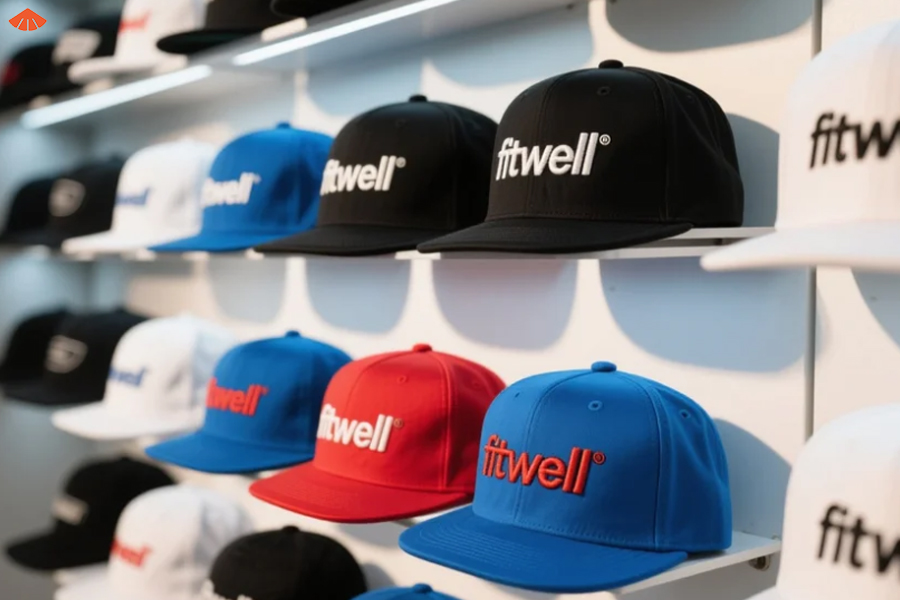
Total Loss Calculation: 1000 Unsold Hats After 6 Months
Now we can calculate the full financial impact, comparing three common scenarios for clearing remaining stock. The numbers below are based on the case study’s actual costs and sales data.
Scenario 1: Selling Remaining Stock at 50% Discount
After 6 months, the owner has 820 hats left (180 sold at full price in the first 3 months). Selling the rest at 50% off ($14.99 each) generates $12,291.80 in revenue.
Total revenue from full-price sales: 180 × $29.99 = $5,398.20
Total revenue from discount sales: 820 × $14.99 = $12,291.80
Total combined revenue: $17,690
Total costs (production + holding): $8,896
Net profit: $8,794
While this scenario still turns a profit, it’s 45% lower than the projected $16,000 profit from selling all units at full price. The lost profit counts as an opportunity loss.
Flat bill snapback hats often have high enough margins to survive discounting, but the 6-month delay means the owner can’t reinvest the capital in new seasonal stock.
Scenario 2: Liquidating Stock to a Discount Retailer
If the owner sells all remaining 820 hats to a discount chain for $5 per unit, the math changes drastically. This is the fastest way to clear stock but generates the lowest return.
Total full-price revenue: $5,398.20
Liquidation revenue: 820 × $5 = $4,100
Total revenue: $9,498.20
Total costs: $8,896
Net profit: $602.20
This scenario barely breaks even, and when you factor in the time spent managing the order and inventory, the owner effectively loses money on the batch.
For custom embroidered hats with unique branding, liquidation is often a last resort, as discount retailers may refuse to stock branded products without permission.
Many5 panel hat customorders end in liquidation because brands overestimate demand for their specific logo or design.
Actionable Strategies to Avoid Snapback Overstock Losses
The good news is that these losses are preventable. For streetwear hat wholesalers, startup founders, and small business owners, a few simple strategies can reduce inventory risk while still capitalizing on peak season demand.
Smart Ordering & Inventory Forecasting Tips
The first step to avoiding overstock is building a data-backed ordering strategy, rather than relying on gut feeling or past success.
Start with small test orders: Order 100-200 units first to test demand, then scale up fast if sales are strong
Use 3-month rolling forecasts: Update sales forecasts every month based on real-time data, not last year’s numbers
Diversify product mix: Order 3-4 different styles instead of betting all your budget on one design
Negotiate flexible MOQs: Work with suppliers that allow minimum order quantities of 50-100 units for custom designs
For example, instead of ordering 1000 of the sameblack flat brim snapback, order 250 each of 4 different styles to spread risk.
Custom logo&color options can also be adjusted mid-season if a certain design is underperforming, as long as you have a flexible supplier.
Fast Stock-Clearing Tactics for Slow-Moving Inventory
If you do end up with excess stock, acting fast is key. The longer you hold inventory, the more it costs you, and the less valuable it becomes as trends change.
Wholesale outreach: Reach out to 10-15 local streetwear stores and offer 40-50% off retail for bulk orders
Bundle promotions: Pair slow-moving hats with best-selling t-shirts or hoodies at a combined discount
Flash sales: Run 24-hour flash sales on Instagram and TikTok to create urgency and move stock fast
Pop-up events: Rent a cheap market stall or pop-up space in a busy shopping area to sell excess stock in person
For the 3d embroidery snapback styles that are slow to sell, adding a free custom patch with purchase can make them more appealing to customers.
Acting within the first 2 months of slow sales can cut holding costs by 60% and reduce total losses significantly.
Interested in custom cap solutions? Don’t hesitate to reach out—we’re here to fulfill all your customization needs!
Follow & Message Us:
Facebook:https://www.facebook.com/fitwell.li
Instagram: www.instagram.com/fitwellcustomhats.dds/
LinkedIn:http://www.linkedin.com/in/fitwellcustom-hats-38a2b9b0/
Pinterest: http://www.pinterest.com/FitwellCustomHatsdds/
YouTube: http://www.youtube.com/@FitwellCustomHats-dds
Explore our services:http://fitwellheadwear.en.alibaba.com
WhatsApp us now: https://psce.pw/86jwa3