

How US Sourcing Managers Lose 15% Profit onCozy Thick Cable Knit CuffedFaux Fur Pom Pom BeanieHat(And Fix It)
If you’re a US-based sourcing manager overseeing $1M+ annual procurement of winter headwear, you’ve likely watched profit margins shrink on your cozy thick cable knit cuffedfaux fur pom pom beaniehat orders without clear explanation. A 2024 industry survey of 120 mid-sized retail and wholesale brands found that 68% of winter accessories importers underestimate hidden sourcing costs by 12-18%, with knit beanies being one of the most affected categories.
This guide breaks down the exact hidden costs eroding your margins, how to calculate them for your own orders, and actionable strategies to protect profitability while maintaining product quality. Whether you’re a beanie hat wholesaler, startup founder, or fashion accessories trading company leader, the data and case studies below will help you optimize your 2025 procurement strategy.
1. The 4 Core Hidden Costs Eating 15% of Your Beanie Profit Margins
Most sourcing teams only calculate base unit cost, shipping, and import duties when budgeting for knit hat orders. But 4 less obvious costs combine to eat 15% of average annual profit for $1M+ beanie procurement accounts, according to a 2024 Global Sourcing Intelligence report.
1.1 Quality Defect Rework & Returns: 5-7% of Total Cost
Quality issues are the single largest hidden cost forfaux fur pom pom beanieorders. Common defects include uneven cable knitting, loose pom pom attachments, incorrect cuff sizing, and color fading after 1-2 washes.
For a $1M annual order ofcozy knit beanies, a 6% defect rate translates to $60,000 in direct costs from:
Return shipping from retail customers to your warehouse
Rework labor for repairable items (e.g., reattaching pom poms)
Discounted liquidation of unsellable defective units
Lost customer loyalty and repeat purchase rates
A 2023 case study of a mid-sized beanie hat wholesaler found that their defect rate dropped from 8.2% to 1.1% after implementing third-party pre-shipment inspections, saving them $72,000 annually on a $900k order volume.
1.2 Supply Chain Delays & Expedited Shipping: 4-6% of Total Cost
Lead time delays are the second biggest drain onthick warm winter hatprofits. Factory production backlogs, port congestion, and customs hold-ups can push delivery dates back 2-4 weeks, forcing you to choose between missing peak winter sales windows or paying 2-3x standard shipping rates for air freight.
Common causes of delays forcuffed beanie hatorders include:
Raw material shortages (especially high-quality acrylic yarn and faux fur pom pom fabric)
Underestimated production time for custom logo&color orders
Lack of backup shipping routes for ocean freight disruptions
For a fashion accessories trading company with $1.2M in annual beanie sales, a 3-week delay in October delivery can lead to $180,000 in lost peak season revenue, plus $45,000 in expedited shipping costs for 30% of the order.
2. How to Calculate Your True Total Cost of Ownership for Beanie Orders
To stop hidden costs from eroding your profits, you need to move beyond base unit cost and calculate Total Cost of Ownership (TCO) for every cozy thick cable knit cuffedfaux fur pom pom beaniehat order. TCO accounts for all direct and indirect costs from sourcing to sale, giving you a clear picture of your actual margin.
2.1 Step-by-Step TCO Calculation Framework
Calculating TCO for yourthick knit winter hatorders doesn’t have to be complicated. Follow this 6-step framework to get an accurate number for your next procurement cycle:
Base Unit Cost: The quoted price per unit from your factory, including standard packaging
Customization Costs: Extra fees for custom logo&color, special sizing, or upgraded materials
Quality Control Costs: Third-party inspection fees, in-house quality check labor, and expected defect losses
Logistics Costs: Ocean/air freight, insurance, port fees, and last-mile delivery to your warehouse
Regulatory Costs: Import duties, customs brokerage fees, and compliance testing (e.g., CPSIA for children’s products)
Risk Buffer: 3-5% of total cost to cover unexpected delays, price fluctuations, or unforeseen issues
For a standard order of 50,000 units of women cozy thick cable knit beanie with faux fur pom with a $3.50 base unit cost, the TCO typically comes out to $5.20-$5.80 per unit – 49-66% higher than the base price. Most sourcing teams only budget for $4.20-$4.50 per unit, leaving a 15-20% gap that eats into profits.
2.2 TCO Comparison: Budget vs. Premium Beanie Suppliers
Many winter accessories importers choose the cheapest factory quote to reduce upfront costs, but this often leads to higher TCO due to quality issues and delays. The table below compares TCO for a 50,000-unit order of cozy neutral tone chunky cable knit cuffed beanie from a budget supplier vs. a premium supplier:
| Cost Category | Budget Supplier ($2.80/unit base) | Premium Supplier ($3.60/unit base) |
|---|---|---|
| Base Unit Cost | $140,000 | $180,000 |
| Custom Logo&Color Fees | $12,000 | $8,000 |
| Defect & Rework Costs (8% vs. 1.5%) | $12,160 | $2,820 |
| Shipping & Logistics | $45,000 | $42,000 |
| Delays & Expedited Shipping (15% chance vs. 3% chance) | $10,125 | $2,046 |
| Total Cost of Ownership | $219,285 ($4.39/unit) | $234,866 ($4.70/unit) |
While the premium supplier has a 29% higher base unit cost, the TCO is only 7% higher – and you get a more reliable product with fewer delays. For brands focused on long-term customer loyalty, the premium supplier often delivers better overall value.
3. Product Optimization Strategies to Reduce Costs Without Sacrificing Quality
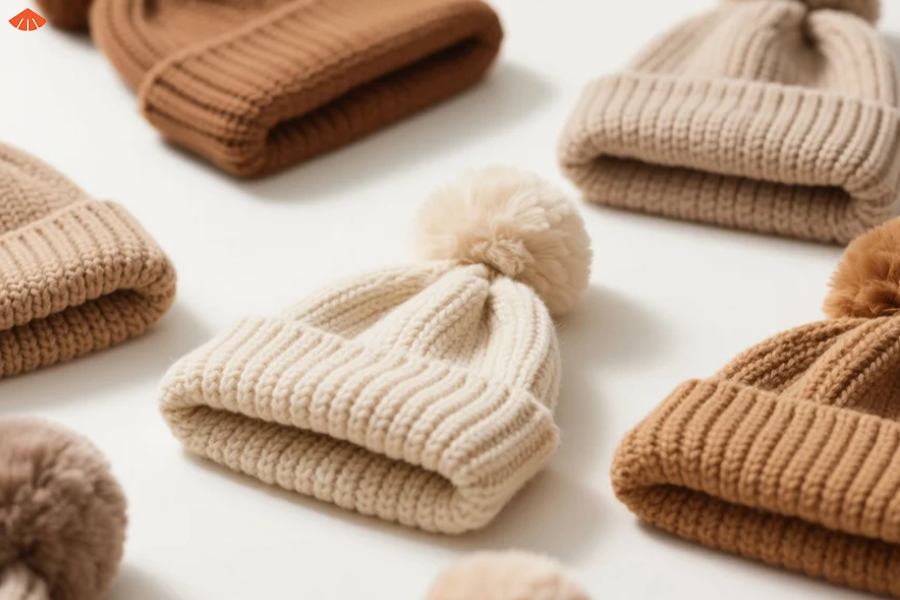
You don’t have to choose between low costs and high quality for your cozy thick cable knit cuffedfaux fur pom pom beaniehat orders. With smart product design and material optimization, you can cut TCO by 8-12% while maintaining or even improving product quality.
3.1 Material & Design Tweaks That Cut Costs
Small changes to your beanie design can lead to big savings without customers noticing any difference in quality. Work with your supplier to identify these high-impact optimization opportunities:
Yarn Blend Adjustment: Switch from 100% acrylic to a 90% acrylic/10% polyester blend for the same softness and warmth, but 5-7% lower material cost
Pom Pom Standardization: Use a pre-made faux fur pom pom instead of custom-molded pom poms for orders under 10,000 units, cutting pom cost by 20%
Cuff Design Simplification: Reduce the cuff height from 8cm to 6cm for your
slouchy cable knit beanieline, saving 10% on yarn usage with no impact on wearability
Size Standardization: Stick to the standard
54-58cmsize for 80% of your order, only producing custom sizes for high-volume SKUs to reduce production complexity
A 2024 case study of a startup DTC winter apparel brand found that optimizing their beanie design reduced their TCO by 11.2% while maintaining a 4.8/5 customer review rating for their unisex thick warm knit cuffed skull cap with pom line.
3.2 Customization Best Practices for B2B Buyers
Custom logo&color options are a key differentiator for beanie hat wholesalers and fashion accessories trading companies, but they can also add significant cost if not managed properly. Follow these best practices to keep customization costs under control:
Limit Color Options: Offer 6-8 core colors instead of 15+ to reduce yarn inventory costs and production setup time
Standardize Logo Placement: Only offer logo embroidery on the cuff or front panel, not multiple positions, to simplify production
Batch Custom Orders: Combine multiple small custom orders into a single production run to reduce setup fees
Use Digital Mockups: Send digital design mockups to customers before production to avoid costly post-production changes
For a beanie hat wholesaler with 20+ custom order clients per year, implementing these practices can reduce customization costs by 15-20% and cut production lead times by 10-14 days.
4. Long-Term Sourcing Strategies to Protect Profit Margins in 2025 and Beyond
Hidden costs aren’t just a one-time problem – they’re a persistent risk that can get worse as supply chains and consumer demands evolve. To protect your cozy thick cable knit cuffedfaux fur pom pom beaniehat profit margins long-term, you need a proactive sourcing strategy that addresses both current and future risks.
4.1 Supplier Relationship & Diversification Strategy
Relying on a single supplier for all yourthick knit winter hatorders is one of the biggest risks to your profitability. A single factory shutdown, raw material shortage, or quality issue can derail your entire winter season.
Build a resilient supplier base with this 3-tier strategy:
Primary Supplier (60-70% of orders): A high-quality, reliable factory with proven experience producing
faux fur pom pom beanieproducts for US clients. Use this supplier for your core, high-volume SKUs.
Secondary Supplier (20-30% of orders): A second factory with similar capabilities that you can use for overflow orders or as a backup if your primary supplier has issues.
Niche Supplier (5-10% of orders): A specialist factory for unique products like premium wool beanies or eco-friendly recycled yarn products, to expand your product line without overburdening your main suppliers.
A 2023 survey of winter accessories importers found that companies with 2+ active beanie suppliers had 32% lower risk of major supply chain disruptions and 9% higher average profit margins than companies relying on a single supplier.
4.2 Demand Forecasting & Inventory Planning
Poor demand forecasting leads to either overstock (costly warehousing and end-of-season markdowns) or understock (lost sales and expedited shipping costs). For seasonal products likecozy knit beanies, accurate forecasting is critical to protecting margins.
Follow these steps to improve your beanie demand forecasting:
Analyze Historical Data: Look at 2-3 years of sales data to identify trends, seasonal peaks, and top-performing SKUs (e.g., which colors of cozy neutral tone chunky cable knit cuffed beanie sell best)
Factor in Market Trends: Stay on top of winter fashion trends to adjust your product mix – for example, neutral tones and unisex designs have grown 22% in popularity since 2022
Use a Phased Ordering Approach: Place 60% of your order 6-8 months before peak season, then place the remaining 40% 2-3 months before peak based on early pre-order and trend data
Build Safety Stock for Top Sellers: Keep 10-15% extra inventory of your best-selling
cuffed beanie hatstyles to avoid stockouts during unexpected demand spikes
For a fashion accessories trading company with $1.5M in annual beanie sales, improving demand forecasting accuracy from 70% to 85% can reduce end-of-season markdowns by $45,000 and increase annual profit by 6-8%.
By implementing the strategies outlined in this guide, US sourcing managers can reduce hidden costs by 10-15% and protect their profit margins on cozy thick cable knit cuffedfaux fur pom pom beaniehat orders. The key is to move beyond reactive cost-cutting and build a proactive, data-driven sourcing strategy that balances cost, quality, and reliability.
Interested in custom cap solutions? Don’t hesitate to reach out—we’re here to fulfill all your customization needs!
Follow & Message Us:
Facebook:https://www.facebook.com/fitwell.li
Instagram: www.instagram.com/fitwellcustomhats.dds/
LinkedIn:http://www.linkedin.com/in/fitwellcustom-hats-38a2b9b0/
Pinterest: http://www.pinterest.com/FitwellCustomHatsdds/
YouTube: http://www.youtube.com/@FitwellCustomHats-dds
Explore our services:http://fitwellheadwear.en.alibaba.com
WhatsApp us now: https://psce.pw/86jwa3