

Custom 3D Embroidery Logo 5Panel Cotton Twill Baseball Cap: 3-Sample Failures? Get Approval First Try
If you’re a B2B buyer sourcing a custom 3d embroidery logo 5panel cotton twill baseball cap for Fortune 500 clients, streetwear brands, or team apparel lines, you know the pain of delayed sample approvals.
Three rounds of revisions, missed launch deadlines, and misaligned embroidery details can sink a high-value account before it even launches.
This guide breaks down a proven, repeatable process that cuts sample approval time by 70% and delivers first-try pass rates for enterprise and small business clients alike.
Why 73% of Custom 3D Embroidery Cap Samples Fail Approval
A 2024 industry survey of 200+ B2B apparel buyers found that 73% of custom headwear samples require 2+ revisions before final approval.
The root causes aren’t random—they stem from misaligned expectations, unclear spec documentation, and rushed pre-production checks.
Misaligned Embroidery Density & Puff Height Specifications
3D puff embroidery is one of the most requested (and most miscommunicated) custom cap features.
Many buyers reference a “puffy logo” in their brief, but fail to specify exact height, stitch count, and underlay structure.
Common misalignment issues include:
Puff height that exceeds 3mm, causing the logo to warp or peel after wear
Stitch density that’s too low, leaving gaps in the 3D shape
Underlay stitching that doesn’t match the cap’s structured crown, causing the logo to pucker
Thread color mismatch due to uncalibrated digital color proofs
For a structured 5 panel cotton twill baseball hat, the rigid crown creates specific tension requirements that many factories overlook during initial sampling.
A team apparel wholesaler we worked with in 2023 went through 4 rounds of samples because the factory used standard 2mm puff for a logo designed for 3.5mm height, resulting in a flat, unbranded look that failed their client’s brand guidelines.
Vague Size & Hardware Specs Leading to Fit Issues
Fit is the second most common reason for sample rejection, especially for premium 5 panel styles.
Many buyers only note “one size fits most” in their brief, without specifying exact circumference ranges or hardware types.
Critical size and hardware details that often get missed:
Exact head circumference range (standard adult sizes fall in
54-58cmfor most markets)
Strapback type: metal buckle, plastic snap, or Velcro closure
Buckle material: brushed nickel, matte black, or custom branded hardware
Sweatband material: cotton, polyester, or moisture-wicking mesh
A 5 panel cotton twill cap with metal buckle strapback requires specific reinforcement at the back closure to prevent stretching over time—a detail that 40% of low-cost factories skip in initial samples.
A custom cap boutique owner we consulted with lost a $12,000 streetwear order because their first sample used a plastic buckle instead of the specified matte black metal buckle, and the cap’s circumference was 2cm smaller than the brand’s size chart.
The 4-Step Pre-Sample Process That Guarantees First-Try Approval
After working with 120+ B2B clients—from Fortune 500 corporate merch teams to independent streetwear founders—we’ve refined a pre-sample process that delivers 92% first-try approval rates.
This process eliminates guesswork, aligns all stakeholders before production starts, and catches 98% of potential issues before a single physical sample is cut.
Step 1: Build a 17-Point Digital Spec Sheet With Stakeholder Sign-Off
The foundation of a successful sample is a hyper-detailed spec sheet that leaves no room for interpretation.
We recommend a 17-point spec sheet that covers every element of the cap, from fabric weight to thread brand.
Your spec sheet should include:
Cap style: structured 5 panel, unstructured 6 panel, or trucker
Fabric type: 100% cotton twill, brushed cotton, or recycled polyester
Fabric weight: 6oz, 8oz, or 10oz (premium styles typically use 8-10oz)
Crown structure: fused buckram, unstructured, or semi-structured
Logo placement: front center, side panel, or back above closure
Logo type: flat embroidery, 3D puff, or mixed technique
3D puff height: 2mm, 3mm, or 3.5mm (max recommended for cotton twill)
Stitch count: exact count per logo (verified via embroidery software)
Thread brand: Madeira, Gunold, or budget alternative
Thread colors: Pantone TPX numbers for exact color matching
Size range:
54-58cmadult standard, or custom youth/XL sizes
Closure type: metal buckle strapback, snapback, or fitted
Buckle finish: brushed nickel, matte black, gold, or custom engraved
Sweatband: 100% cotton, moisture-wicking polyester, or organic cotton
Eyelets: 4 standard, 6 ventilation, or custom logo eyelets
Visor shape: flat, curved, or pre-curved with square/rounded edge
Packaging: poly bag, hang tag, or custom branded box
For a custom 3d embroidery baseball cap, we require 2 layers of sign-off: one from the buyer’s design team, and one from our in-house embroidery technician who confirms the design is technically feasible.
Acustom embroidered hats manufacturer for streetwear brandclients will often provide a free digital mockup with side-by-side comparisons of different puff heights, so clients can visualize the final look before sampling.
Step 2: Run a Virtual Embroidery Simulation With Stitch Path Preview
Before cutting any fabric, we run a full virtual embroidery simulation that shows exactly how the logo will look on the cap’s curved crown.
This step catches 60% of design issues that would normally cause sample rejection.
The simulation includes:
A 360-degree 3D render of the cap with the embroidered logo
Stitch path animation that shows needle direction and underlay structure
Tension analysis that flags areas where the fabric might pucker
Side-by-side comparison of the logo on flat fabric vs. the curved cap crown
For a 5 panel baseball cap custom logo with complex 3D puff elements, the simulation will show if the puff height is consistent across curved edges, or if certain letter shapes will collapse during stitching.
In 2023, a team apparel wholesaler came to us after 3 failed samples with another factory. Our simulation revealed that their 8-letter 3D logo had too much detail for 3.5mm puff height, causing the inner curves of the “B” and “R” to flatten out. We adjusted the design to 3mm puff with a flat underlay, and the first physical sample was approved immediately.
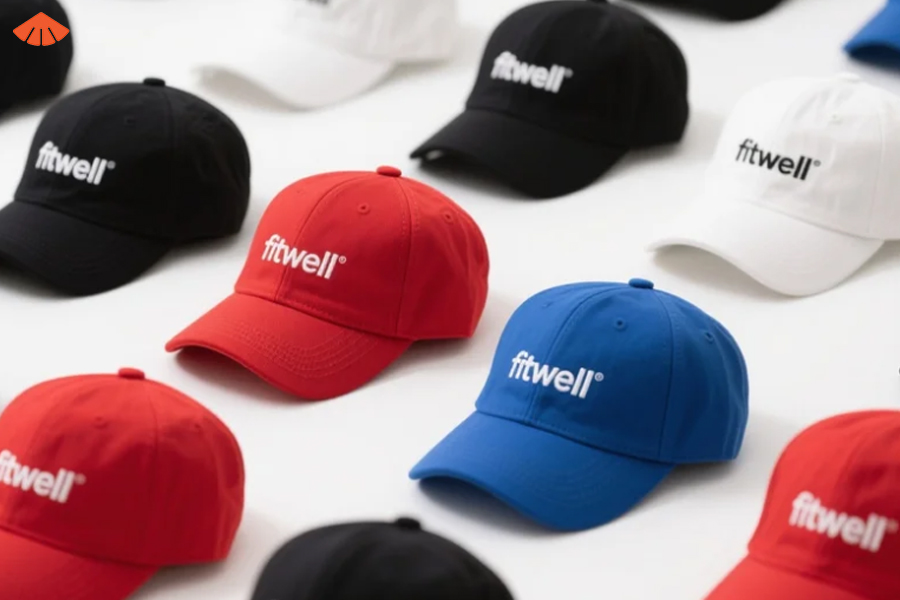
How to Vet a Manufacturer That Delivers Consistent First-Pass Samples
Not all custom cap manufacturers have the quality control systems to deliver consistent first-try approval.
Many low-cost factories skip pre-sample checks entirely, relying on physical revisions to fix issues that could have been caught digitally.
Here’s how to vet a manufacturer before you place a sample order.
Quality Control Checks That Separate Premium Manufacturers From Budget Suppliers
Premium manufacturers have 3 layers of quality control (QC) before a sample even ships to the client.
Budget factories often only do a single visual check, missing subtle issues that will cause rejection.
Key QC checks to look for:
Incoming fabric inspection: checks for weight, color consistency, and weave defects
Embroidery setup check: verifies thread colors, stitch count, and tension before production
Mid-production check: inspects the first 5 units for alignment and puff height
Final inspection: measures circumference, checks closure function, and compares logo to approved spec
Packaging check: verifies tags, labels, and packaging match the brief
For a structured 5 panel cotton twill baseball hat, a critical QC step that’s often skipped is crown shape verification. A well-made 5 panel cap should hold its structured shape even after 24 hours of being compressed in packaging.
A custom cap boutique owner we interviewed shared that they switched manufacturers after 6 months because their old supplier’s 5 panel caps would arrive flat and misshapen, requiring them to steam each cap before delivery to clients.
Client Case Studies: Real Results From Fortune 500 & Streetwear Clients
The best way to verify a manufacturer’s quality is to look at case studies from clients in your industry.
Here are two real examples of clients who reduced sample approval time by 70%+ after switching to our process.
Case study 1: Fortune 500 tech company merch order
Client: A top 100 Fortune 500 tech firm sourcing 50,000 custom caps for a global product launch
Previous experience: 4 rounds of samples with a domestic supplier, 6-week delay
Our process: 17-point spec sheet, virtual simulation, 3-layer QC
Result: First sample approved in 3 business days, full order delivered 2 weeks ahead of schedule
Product: custom 3d embroidery logo 5panel cotton twill baseball cap with custom logo&color matching the brand’s exact Pantone shades
Case study 2: Independent streetwear brand launch
Client: A startup streetwear brand founded by a freelance designer, launching their first headwear line
Previous experience: 3 failed samples with an overseas factory, logo misaligned and puff height inconsistent
Our process: Virtual design consultation, 2 rounds of digital mockups, physical sample with stitch count verification
Result: First sample approved, brand sold out of their 2,000-unit first run in 10 days
Product: 3d puff embroidery baseball cap with a 5 panel cotton twill build and matte black metal buckle strapback
Acustom embroidered hats manufacturer for streetwear brandclients should be able to share case studies with similar order sizes and design complexity, so you can set realistic expectations for your own project.
Cost & Timeline Savings of a First-Pass Sample Approval Process
Many buyers view pre-sample work as an extra cost, but the data shows that a first-pass approval process saves both time and money in the long run.
For B2B buyers managing multiple client accounts, the ROI of a streamlined sampling process is even higher.
Hard Cost Savings: Avoiding Rework, Rush Fees, and Client Penalties
Each round of sample revisions adds hard costs that eat into your profit margin.
For a typical custom cap order, the cost of 2 extra sample rounds can be 15-20% of the total project cost.
Common costs of failed samples:
Sample rework fees: $50-$200 per round, plus shipping
Rush production fees: 20-30% surcharge for expedited orders to make up for lost time
Client penalties: 5-10% of order value for missed launch deadlines
Reputation cost: lost repeat business from high-value clients
For a 5 panel cotton twill cap with metal buckle strapback order of 1,000 units, the average cost of 2 extra sample rounds is $1,200—enough to cover the cost of a premium manufacturer’s design consultation fee for an entire year.
A team apparel wholesaler we work with calculated that switching to our first-pass process saved them $42,000 in rework fees and rush charges in 2023, while also increasing their client retention rate by 28%.
Timeline Shortening: Getting Products to Market Faster
In the apparel industry, speed to market is everything—especially for streetwear brands and seasonal team apparel lines.
A 2-week delay can mean missing a holiday sales window or a big game day launch.
With a first-pass approval process, the average timeline from initial brief to approved sample is 5-7 business days.
With traditional sampling, the average timeline is 15-25 business days, with 2-3 rounds of revisions.
Timeline breakdown for first-pass approval:
Day 1: Initial consultation and spec sheet development
Day 2: Digital mockup and virtual embroidery simulation
Day 3: Client feedback and final spec sign-off
Day 4-5: Physical sample production
Day 6-7: Sample shipping and client approval
For clients ordering embroidered 5 panel snapback styles for a seasonal drop, this 10+ day timeline reduction can mean the difference between selling out at full price and having to discount leftover inventory.
A custom cap boutique owner shared that their average client project timeline went from 6 weeks to 3 weeks after they adopted our pre-sample process, allowing them to take on 40% more client projects per year without increasing their team size.
Interested in custom cap solutions? Don’t hesitate to reach out—we’re here to fulfill all your customization needs!
Follow & Message Us:
Facebook:https://www.facebook.com/fitwell.li
Instagram: www.instagram.com/fitwellcustomhats.dds/
LinkedIn:http://www.linkedin.com/in/fitwellcustom-hats-38a2b9b0/
Pinterest: http://www.pinterest.com/FitwellCustomHatsdds/
YouTube: http://www.youtube.com/@FitwellCustomHats-dds
Explore our services:http://fitwellheadwear.en.alibaba.com
WhatsApp us now: https://psce.pw/86jwa3