

Why YourCozy Thick Cable Knit CuffedFaux Fur Pom Pom BeanieHatLoses Money on Ads (And How Set Bundles Double AOV)
If you sell a cozy thick cable knit cuffedfaux fur pom pom beaniehat as a single SKU, you’ve likely felt the squeeze: thin margins, rising ad costs, and cart values too low to justify paid traffic. For B2B buyers, startup founders, small business owners, and even freelancers building accessory brands, single-hat sales often fail to cover customer acquisition costs (CAC).
The fix isn’t raising prices—it’s packaging beanies into mother-daughter, couple, or parent-child sets that instantly double average order value (AOV) while giving customers a gifting-ready, shareable product they’ll love.
In this guide, we’ll break down exactly how to transition from single-unit sales to high-margin set bundles, backed by real industry data and actionable steps for every audience.
Why Single Beanie Sales Fail to Deliver Profitable Ad ROI
Most beanie sellers start with one core SKU, assuming low price points will drive volume. But in a crowded winter accessory market, single-unit sales rarely generate enough revenue to offset ad spend, especially on platforms like Google Ads or Meta.
The Hidden Margin Drain of Single-Unit Hat Sales
A singlefluffy pom pom hatmight sell for $19.99, but after production, shipping, packaging, and ad costs, net profit often drops to $2–$4 per order. For small business owners running tight budgets, that leaves almost no room for scaling.
Key cost factors eating into single-hat profits include:
Fixed per-order costs: Payment processing, pick-and-pack, and shipping labels stay the same whether you sell 1 or 3 hats
Ad CAC inflation: Winter accessory ad costs rise 30–40% between October and December, per seasonal e-commerce data
Low repeat purchase rate: Customers rarely buy a second single beanie within the same season, limiting lifetime value (LTV)
For a beanie hat boutique testing its first paid campaigns, this dynamic often means breaking even at best—or losing money on every new customer.
Why Paid Traffic Struggles With Low-Priced Single SKUs
Paid algorithms reward high AOV and strong conversion value, not just high click-through rates. When your core product is a low-cost singlepom pom winter hat, platforms struggle to find high-intent buyers who deliver enough revenue to justify ad placement.
Common paid traffic pain points for single-beanie sellers:
Low ad rank due to low expected conversion value
High cost per acquisition (CPA) that outpaces per-unit profit
Limited ability to test high-intent keywords with higher competition
Poor ROAS (return on ad spend) during peak winter season
Even if you drive 1,000 visitors to your store, if each order only nets $3, you’ll need massive volume just to cover basic operating costs. For startup founders and freelancers launching a brand, this volume is often impossible to achieve in a single season.
How Beanie Set Bundles Double AOV (And Boost Margins)
The fastest way to fix low single-unit profitability is to create curated beanie sets designed for specific customer segments: mother-daughter, couple, and parent-child matching sets. These bundles turn a $20 order into a $40–$60 order overnight, while adding perceived value that justifies a higher price point.
Set Bundle Types That Resonate With Winter Shoppers
Not all sets perform equally. The most successful beanie bundles tap into emotional triggers: gifting, matching outfits, and family or couple bonding. For a cute aesthetic cable knit winter beanie hat, these set formats drive the highest conversion rates:
Top-performing beanie set formats:
Mother-daughter matching sets: Two beanies in identical or complementary designs, perfect for family photos and holiday gifting
Couple matching sets: His-and-hers styles with subtle design differences (e.g.,
oversized knit beaniefor him, fitted cuffed style for her)
Parent-child mini sets: Adult + kid-sized beanies, ideal for family outings and seasonal portraits
Friend group bundles: 3–4 beanies at a slight bulk discount, targeted at Gen Z and millennial shoppers
For B2B buyers sourcing for retail or gifting programs, these sets also work as corporate holiday gifts or branded merchandise bundles.
The Math Behind Set Bundle Profitability
Let’s break down the numbers to show exactly how sets improve margins. We’ll use a standard cozy thick cable knit cuffedfaux fur pom pom beaniehat as the base SKU, with typical costs for small to mid-sized sellers.
Single vs. set bundle profit comparison:
Single hat: $19.99 retail, $8 COGS, $4 shipping/packaging, $6 ad CAC = $1.99 net profit
2-hat mother-daughter set: $39.99 retail, $16 COGS, $5 shipping/packaging, $8 ad CAC = $10.99 net profit
3-hat family set: $54.99 retail, $24 COGS, $6 shipping/packaging, $10 ad CAC = $14.99 net profit
As you can see, doubling the number of hats per order more than quintuples net profit, because fixed per-order costs stay nearly the same. For a knitwear product development firm building a product line for clients, this math makes set bundles a non-negotiable recommendation.
Designing High-Converting Beanie Sets for Every Audience
Creating a profitable beanie set isn’t just about putting two hats in a bag. It requires intentional design, sizing, and customization that aligns with your target customers’ needs—whether you’re selling direct-to-consumer or partnering with B2B clients.
Core Design Elements for Premium Beanie Sets
To justify a set price point, your bundles need to feel intentional, not like an afterthought. For a sherpa lined beanie set, focus on details that signal quality and thoughtfulness:
Key design features for high-converting sets:
Matching color palettes: Coordinating (not necessarily identical) colors for couples or family members
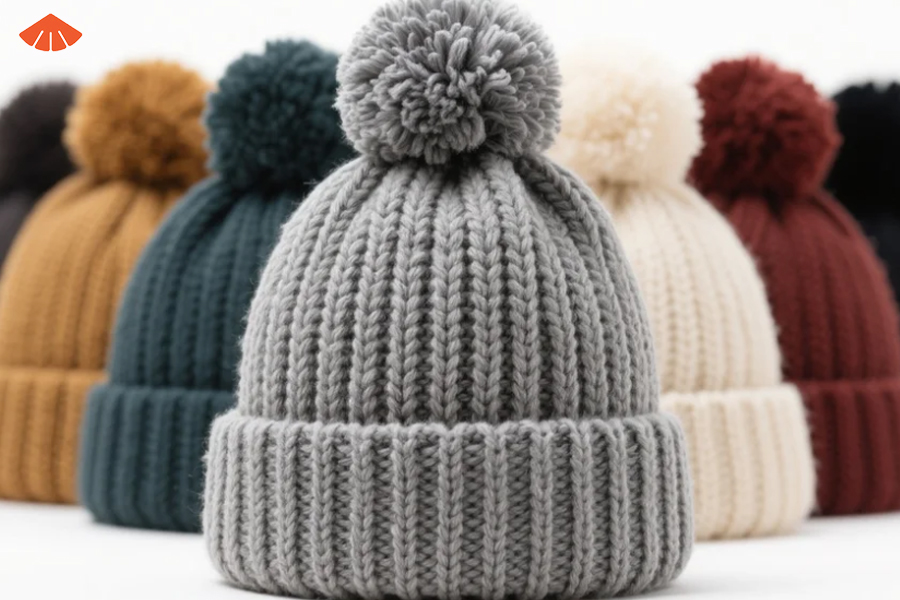
Consistent texture: Matching cable knit patterns and
faux fur pom pom beaniestyles across all sizes
Size variety: Adult sizes at
54-58cm, with scaled-down kids’ sizes for parent-child sets
Subtle differentiation: For couple sets, use a
fold over cuff beaniefor one size and a slightly slouchy fit for the other
Premium lining: Sherpa lining for extra warmth, which adds perceived value without huge cost increases
For a cute aesthetic cable knit winter beanie hat targeted at Gen Z and millennial shoppers, add small details like embroidered initials or removable pom poms to make the set feel personal.
Customization Options for B2B and Brand Clients
If you work with B2B buyers or offer private label services, customization is what sets your beanie sets apart from generic bulk options. An OEM custom logo cable knit cuffed toque set, for example, is a top seller for corporate gifting and brand merchandise programs.
High-demand customization options for set bundles:
custom logo&color: Branded embroidery or woven labels for corporate clients, boutique brands, and influencer collaborations
Packaging customization: Coordinated gift boxes or reusable bags, which is a key selling point for a hat packaging design firm looking to add value for its clients
Size range flexibility: Custom size sets for different age groups or team sizes
Limited-edition colorways: Exclusive colors for boutique partners to reduce price competition
For a beanie hat boutique, offering custom monogrammed sets can help you stand out from big-box retailers and command a 20–30% price premium.
Launching and Scaling Your Beanie Set Line
Once you’ve designed your beanie sets, the next step is launching them in a way that maximizes visibility, conversions, and long-term profitability. For startup founders and small business owners, this means testing fast, doubling down on what works, and leveraging both organic and paid channels.
Step-by-Step Launch Strategy for New Beanie Sets
A successful launch doesn’t require a huge budget—it requires a clear plan that targets high-intent customers first. Use this step-by-step framework to launch your first set bundle:
Launch roadmap for beanie set bundles:
Soft launch to existing audience: Email your subscriber list and post on social media to test demand before spending on ads
Bundle-only discount: Offer 10% off sets for the first 7 days to drive initial sales and reviews
Gift-focused messaging: Position sets as holiday, birthday, or anniversary gifts to tap into gifting intent
User-generated content (UGC) campaign: Encourage buyers to share photos of their matching sets for social proof
Paid ad testing: Start with small-budget Google Shopping and Meta ads targeting gifting and family/couple keywords
For freelancers and consultants advising accessory brands, this launch framework works for both DTC and B2B product lines, with slight adjustments for audience.
Scaling: From Test SKU to Top-Selling Product Line
Once your initial set proves profitable, it’s time to scale. The goal is to turn a single bundle into a full product line that drives 40–60% of your total beanie revenue.
Scaling strategies for beanie set lines:
Expand set variations: Add 3-hat family sets, friend group bundles, and pet + owner matching sets
Partner with complementary brands: Collaborate with scarf, glove, or coat brands to create full winter accessory bundles
B2B wholesale expansion: Pitch set bundles to knitwear product development firm clients, boutique retailers, and corporate gifting companies
Seasonal limited editions: Launch holiday-themed, Valentine’s Day, or back-to-school set drops to drive repeat purchases
For a hat packaging design firm, scaling also means upgrading packaging as volume grows—moving from poly mailers to custom gift boxes that increase perceived value and support higher price points.
By the end of your first winter season, you’ll likely find that set bundles generate more profit than all your single-beanie sales combined. And as you refine your designs and marketing, you’ll be able to reduce ad CAC further, creating a virtuous cycle of growth.
Interested in custom cap solutions? Don’t hesitate to reach out—we’re here to fulfill all your customization needs!
Follow & Message Us:
Facebook:https://www.facebook.com/fitwell.li
Instagram: www.instagram.com/fitwellcustomhats.dds/
LinkedIn:http://www.linkedin.com/in/fitwellcustom-hats-38a2b9b0/
Pinterest: http://www.pinterest.com/FitwellCustomHatsdds/
YouTube: http://www.youtube.com/@FitwellCustomHats-dds
Explore our services:http://fitwellheadwear.en.alibaba.com
WhatsApp us now: https://psce.pw/86jwa3